Thursday, June 4, 2015

The Brainstorm Vol 42: Books to keep kids busy this summer

I've been remiss in posting recently thanks to the mad-dash-to-the-finish that is the last couple weeks of school. Now that it is THE last day of school, the students have gone home, and teachers are starting to retreat for well-earned vacation time, I have some time to do a summer post.

Instead of books to use in the classroom, this time I'll highlight great books that will keep kids engaged for hours this summer. Yes, the elementary librarian and I came up with some lists of fun books to read this summer for various age groups (see links at the bottom of this post). And I completely and fully hope kids spend hours and hours reading this summer. But these are more books that will keep kids engaged above and beyond just the reading time.
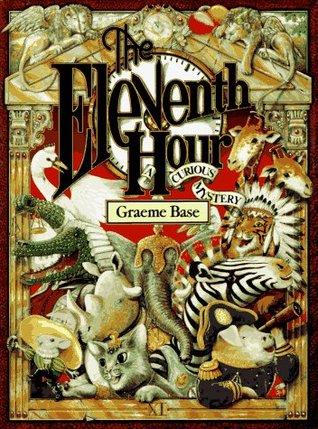

The Eleventh Hour by Graeme Base
At Horace the elephant's birthday party, all the guests are having a grand time until it comes time to eat the gorgeous birthday feast they glimpsed at the start of the day and it is gone. Which guest ate all of the food? That's the mystery readers are challenged to solve, and there are multiple clues in all sorts of forms on every page. The solution is hidden in a special envelope in the back of the book.

You really can't go wrong with a Graeme Base book for hours of entertainment. Even toddlers can adore his gorgeous, brightly colored illustrations and catchy rhyming texts. Older children will love how he always has things hidden in his illustrations for observant readers to find. But this one probably will devour the most time because of the dozens and dozens of various codes and hidden things. I remember spending hours with my siblings pouring over this book one summer as we tried to be the first to solve the crime (Mom hid the answer page from us till she thought we were ready). If you're looking for one book to captivate an elementary-aged kid for the entire summer, this is a solid pick.


Escape from Mr. Lemoncello's Library by Chris Grabenstein
Alexandriaville, OH is getting a new public library, thanks to the generous funding of hometown game designing legend, Luigi Lemoncello. Twelve twelve year olds who win an essay contest will be the luck people to get to enter the new library first, and they don't just get to visit, they get to spend the night. Kyle Keeley is a huge fan of Mr. Lemoncello's games, both board games and video games. They're wild, crazy, and always fun so he's ecstatic to be a winner. He's joined by eleven other students from his class including his best friend Akimi, library aides Miguel and Andrew, town snob Charles, bookworm Sierra, and desperate for fame and/or fortune Haley. The evening proves to be everything the children could have hoped for with fun games galore, but in the morning when they go to leave they find the library's front door locked. It turns out, Mr. Lemoncello has one more, rather elaborate game in store for the children who are game, with a grand prize of lots of money and becoming the future star in Mr. Lemoncello's commercials. Some of the children are in it for the fun of Mr. Lemoncello's games, some are in it as a matter of pride, and some are just plain desperate for the fame and fortune. The game is to figure out how to get out of the library without using the front door and without setting off any alarms. There are clues all over the place for the observant to find, but figuring the way out will be tricky. Kyle and Akimi quickly realize they'd do better as a team, and eventually pick up some other teammates along the way. Charles wants the prize for himself, but he isn't opposed to using others to get there. It's a wild and crazy, mind-stretching ride to the finish to see who will figure things out first.

This has been one of my go-to recommendations for just about any reader this year, and every single one has come back asking if I have any other books like it. The adventure itself is fun, but what sucked me and other readers completely into it's thrall are all the puzzles. Because clever readers can solve the puzzles right along with the kids in the library (and even cleverer readers may solve them before the characters). And there are extra puzzles to solve at the end for those who so choose. It's a code breaker, puzzle solver's enchanted playground of fun. Those who are ready for more advanced code breaking should give the next book a shot.


The Code Book by Simon Singh
Upper middle grade or high school (or adult) readers craving more codes and puzzles should check out this book. Simon Singh presents the history of codes, ciphers and code breaking and the influence of history, linguistics, math, and science (and vice versa). He does this in a highly readable way that flows well. But what puzzle enthusiasts will love most about this book are all the codes that Singh gives readers to crack. Some are really super hard and could potentially take all summer break to crack.


Half a Chance by Cynthia Lord
Lucy's family has just moved, again. She really isn't looking forward to making new friends again or trying to find her place, so she finds it a pleasant surprise when the next door neighbors seem to adopt her into their little group immediately. Of course, they are only there for the summer. In fact, most of the town is only at the lake for the summer, but Lucy will take the friendship while she can get it. She knows there are different kinds of friends, and she keeps waiting for Nate to be one of those interested-only-till-your-not-new-anymore friends, but he keeps inviting her to help on the loon watch and helps her with the photography contest she's secretly decided to enter. It has to be a secret because her dad is the judge, and though there are no rules about family members entering the contest, she knows he'd discount her entry right away if he knew it was her. But she really wants to know what her dad thinks of her pictures. Are they good enough to earn his attention? Can she find the right subjects in this little lake town to give the photos a certain something? And then, Lucy starts to realize that this may be the last time Nate's family comes to the lake at all, and she could lose the only friends she has in her new spot. Through the fates of the local loons, a photography contest, and the things going on with her next door neighbor Nate's Grandma Leilah, Lucy learns a lot about treasuring the moments and dealing with changes.

On page 23 of the book, the photo scavenger hunt is outlined for the characters. Readers looking for a fun photographic challenge for the summer could see what photos they could come up with to fulfill the scavenger hunt themselves. Thanks to digital photography, this would be a cheap activity for kids parents trust with a camera or phone with a camera, but it will also challenge them to think creatively (like the characters in the story) as the words for each photograph are vague and open to lots of interpretation. What to them is a photograph that says "Sticky" or "Secret" or "Out of place" or "Hope?" Those who like competition could challenge friends or relatives to do the same photo scavenger hunt and then compare photos at the end of the summer.

Ms Sarah's Fun Books for K-2nd to Read This Summer
Ms Sarah's Fun Books for 1st-3rd to Read This Summer
Mrs Becky's Fun Books for Middle Grades to Read This Summer
Mrs Becky's Fun Books for Young Adults to Read This Summer

Thursday, May 7, 2015

The Brainstorm Vol 41: Books for K-12 classrooms


Picture Book Resources


Waiting Is NOT Easy by Mo Willems
Piggie has a surprise for Gerald, BUT Gerald has to wait for it. And wait. And wait. And waiting is SO not easy. Gerald just about gives up, but curiosity gets the best of him. Finally the surprise arrives, and it is turns out well worth the wait. Gerald totally captures the essence of everything that is painful about secrets and waiting, but Willems manages to make it humorous. The surprise is something in nature, highlighting the beauty of the simple things around us we take for granted (if you really want to know what it is, click on the title and peek at the spoiler).

Activity Tie-ins:

  • Patience: I know, patience is often a seemingly dirty word. It's so hard. But it is an inevitability. This book provides a great chance to talk to students about the benefits of waiting patiently versus getting something immediately. Have them think of something they had to wait for and something they got quickly, which do they value more?
  • Waiting Activities: This is a great segue into planning how to use time while waiting. Have students brainstorm a list of things they can do to fill those painful hours of waiting, like reading this book or other good books.
  • Appreciating Nature: The surprise is 100% natural, but often overlooked or taken for granted. Have students come up with other options for natural surprises Piggie could show Gerald. Maybe they can even make their own book with their own characters sharing the beauty of creation with each other.
  • Drama/Speech Exercises: Elephant and Piggie are very emotive characters. This book and all of their books are great for having students practice reading expressively. Drama teachers could easily use the books for students to practice various emotions and expressiveness in by acting out the books in class with a partner.

Pirate, Viking & Scientist by Jared Chapman

Pirate and Scientist are friends. Scientist and Viking are friends. But Pirate and Viking are decidedly NOT friends. Scientist wants both his friends to have fun at his birthday party so he comes up with several different hypothesis for how to get the two enemies to be friendly. He tests each one out at his birthday party, but nothing seems to be working. The results are clear, none of Scientist’s hypotheses have been correct so far. So he decides to try one last thing, he asks the two about their favorite activities...and wonder of wonders, the former enemies are brought together by a common interest.

Activity Tie-ins:

  • Scientific Method: If you're looking for a fun way to introduce the scientific method, this is THE book. It's fun and funny, but also scientifically sound. Scientist drafts his hypotheses, runs the experiments, and then goes back to the drawing board each they fail.
  • Friendships: Making friends with people is not always easy. Read this book and talk with students about how finding common ground can help build friendships.
  • Peacemaking: I love that Scientist didn't just choose one of his friends to come to his party, he decided to be a peacemaker between his two friends. A great book to use when talking about resolving conflicts, helping friends work out differences, and being a peer peacemaker.
  • Fun read aloud: Sometimes, we just need to blow off steam with a rollicking good book, and so do kids. As the end of the year craziness starts to set in and tempers start to run short, this may be just the book break you and your class need.
Chapter Book Resource

The Honest Truth by Dan Gemeinhart
Mark is tired of his life being controlled by illness. He's tired of putting on a brave face. He's tired of hiding tears. He's tired of making his parents cry. And so when the latest news comes from the doctor that the cancer is back again Mark grabs his dog and decides to go climb Mt. Rainier. He's thought this through enough that he leads a false trail for the police and his parents so he can actually make it there. The way to the mountain is rough, especially for someone as sick as Mark, but he's determined to die on his own terms. He did leave a note for his best friend Jessie, giving her a clue as to where he's gone. But he trusts her to keep his secret, just as he's trusted her to let him be real when no one else would. Jessie is tormented by this burden Mark has left on her shoulders. Is it best to let him have his desire, or should she tell his worried parents where he is? As Mark sets out to conquer the mountain, he finds unexpected things the trip brings up that he must confront to get at the honest truth.
To be honest, I picked this up expecting the usual cancer book. The type that scars you enough you have to tell someone about it, but really isn't that spectacular writing-wise. This is not the usual cancer book. Gemeinhart's writing has depth in symbolism and lyrical flow (especially when it's Jessie's voice). From the haikus throughout the book that better express things than any paragraph could to the way the mountain symbolizes cancer in a way anyone with cancer (or anyone who has watched someone going through cancer) can relate to. It's not as gut wrenching as A Monster Calls and not as cheesy or cliché as The Fault in Our Stars (and certainly doesn't have the mature content of that book). This is a perfectly even-keeled look at what a person going through cancer experiences, but it is done in an exceedingly artful way.

Activity Tie-ins:

  • Build empathy: If your class has someone going through something like Mark or has a family member going through such an ordeal, this book could help students better understand their struggles. 
  • Symbolism: If you're looking for a book for students to read so that you can talk with them about symbolism, this is a good one. There are several things in the story that can be picked apart and analyzed for greater depth.
  • Debate/Persuasive Paper: Mark puts Jessie in a very tricky position of knowing where Mark is but not knowing whether she should tell his parents or not. This would generate great grounding for a class debate or a short persuasive paper. Did Jessie do the right thing or not? What should she have done differently? What would you have done in her place?
  • Haiku: Haiku poems are found throughout the story and Gemeinhart uses them very well. You can discuss with students why you think the author chose to include these, why they make the writing better, etc. You can also challenge students to write their own haikus in short stories.
  • Voice: The story is told both by Mark and Jessie. Each has a distinct voice even though they were written by the same person. Have students try to analyze what Gemeinhart did to make their voices distinct. Then have them try and write a story that includes two different characters' perspectives and apply what they learned. 
  • Map skills: Readers can practice their map skills by tracing Mark's path. This may also help them better understand the pacing and setting of the story.
  • Writing: Many readers are not going to be 100% satisfied with the end of the story. Ask them to write what happens to Mark and Jessie in the following year.

Thursday, April 30, 2015

The Brainstorm Vol 7 (revamped): Books for K-12 classrooms

This post was originally published internally December 12, 2012. It has been revised for the blog.

Picture Book Resources

Cloud Dance by Thomas Locker
Locker has some simple text that accompanies gorgeous illustrations of clouds in various seasons and
types of weather.

Activity Tie-ins:

  • Art: This could be used in the art classrooms to study the way the artist used light and color. 
  • Weather: It could also be used in science when studying different types of clouds (the last two pages give a nice scientific summary of cloud types). 
  • Compare/Contrast: The artwork could also be used to stimulate compare/contrast as students look at the vastly different clouds and weather depicted on various pages. 
  • Descriptive Writing: Challenge students to describe the picture using only words and see if they can paint a mind picture to rival Locker's painting. 


Time Flies by Eric Rothman

It's no secret I love wordless picture books, so here is another beautifully illustrated wordless story. Rothman has a little bird fly through a museum of dinosaur bones and suddenly finds itself flying amongst live dinosaurs.

Activity Tie-ins:

  • Dinosaurs: If you're looking for a quick read when studying dinosaurs, this would fit the bill. It also could help kids make connections between the skeletons of dinosaurs they see and actual creatures.
  • Museum Visits: Let's face it. Sometimes field trips to museums can be boring for kids. Reading this prior to a museum trip could help you challenge students to try and imagine the things they will see back in time. What did that skeleton used to look like? Who used that tool? Come up with questions they can ask themselves to trigger the imagination and make the museum trip come to life a little bit more.
  • Time Travel genre studies: If you're introducing various genres, this is a quick read that clearly illustrates the key components of time travel books.
  • Writing Prompt (good for any language): Sometimes it is hard for kids (ok, and adults) to come up with ideas of what to write about during a free writing assignment. Giving them a wordless book is a good way to generate ideas. Just ask them to write the story they see or extend the story further with words.
  • Point of View: You can easily challenge students to write accompanying words to this story from various points of view, whether the voice is of a narrator, of the bird, or of one of the dinosaurs that the bird flies by.
  • Pre-reading: I've highlighted a few wordless books, but I don't think I've mentioned how good these are for kids who aren't quite reading yet. The benefits are well-documented. You can do a search of "wordless books and teaching reading" on the internet and come up with dozens of studies. Just one of the benefits is that the progression of the story teaches kids the direction words and pages go in reading, how to turn pages, etc.. Of course, it is great to expose pre-readers to books with words too, but don't discount the value of those picture-only stories in preparing kids to read.
Chapter Book Resource

Climbing the Stairs by Padma Venkatraman
Vidya is from a more modern Brahmin Indian family during the beginnings of WWII. Her father is a doctor, active in the nonviolent Indian freedom movement, who believes that the caste system isn't necessarily right and that his daughter should have the freedom to go to college before marrying (uncommon at the time). Vidya's father suffers severe brain damage when beaten during a protest. At this point Vidya's life dramatically changes. Her family must then go to live with the rest of her father's family in a more traditional Brahmin household. Vidya's life is made miserable by her aunt and uncle, and she realizes she will probably never get to go to college now. The one bright spot in her life is the library, which she at first visits on the sly ‐‐since it lies up on the men’s floor where women are forbidden‐‐ and then, thanks to the all‐powerful word of thatha (her Grandfather) she is granted access to daily. Climbing the stairs to the library ends up changing her life for the better in several ways.

Activity Tie-ins:

  • Indian Culture: Though a historical fiction book, this still gives a very insightful look into Indian culture, the holidays celebrated and variety of beliefs. And it's a great book for Indian students looking for books about people from their own culture (because those are few and far between).
  • Non-Western History: It's hard to find good historical fiction not set in a Western setting, but this does just that. Take a step back in time to 1940s India. How many other books can you name that took place there and then?
  • WWII in India: It's not often you hear what was going on in India during WWII. Most books are focused on Europe or the Pacific, so this is a good reminder that India was also involved in the conflict.
  • Women's Roles & WWII: Obviously, Vidya's various family members have a whole range of opinions about what women were allowed to do. Readers could be asked to compare Vidya's circumstances with what was going on in the rest of the world. WWII era was a big period of change world-wide, though it looked different in many areas.
  • Family Units East vs West: Have readers compare and contrast how families work in India and the rest of the East with how they work in Western societies.
  • Gandhi & Non-violent Protest: Vidya's family has various opinions of Gandhi and his movement. Her father loves Gandhi's ideas, but others in the family are not so sure. A great opening to talk with kids about non-violent protests vs violent protests and the effectiveness of both.

Thursday, April 23, 2015

The Brainstorm Vol 40: Books for multiple K-12 classrooms

Picture Book Resources

More Parts by Tedd Arnold
A boy becomes increasingly worried as he hears his parents, neighbors, teachers, and friends say things about his body coming to pieces. Broken hearts, cracking skin, giving up limbs...it's worrying stuff! Eventually, his parents explain that these phrases are just figures of speech and he doesn't need to worry. A very humorous look at the literal meaning of various common American idioms with hilarious illustrations (showing the measures the boy takes to protect himself) and written in rhyming text.

Activity Tie-ins:

  • Idioms: This is the perfect book to kick off a lesson on idioms used in the English language. You can have students brainstorm other idioms they have heard.
  • Literal vs Figurative Language: This is also a good book to help kids understand the difference between literal and figurative language. Have them see if they can come up with phrases frequently used that are literal and others that are figurative. Or, use an exemplar text and have students find examples of literal and figurative language within (periodicals would most likely have both).
  • Rhyming: Arnold uses nicely rhyming text to tell his humorous tale. See if students can teach another grammar lesson with rhymes.
  • Illustrations: Reading this book without the illustrations would miss out on half the fun. Can lead to a nice discussion of how words and pictures work together to tell a more elaborate story than either can on their own. Have students practice putting comic spins on seemingly neutral phrases with illustrations (if students aren't artistically inclined, this could be done with magazine picture cut outs or clip art).
  • History: Many idioms have interesting root sources that sometimes can be found with a little bit of research. See if students can find out where we got some of the crazy phrases we say.


No Dragons for Tea: Fire safety for kids (and dragons) by Jean E. Pendziwol, ill. by Martine Gourbault

A little girl makes a new friend, a dragon! They have great fun at the beach and then she invites him over for tea. But during tea the pepper starts tickling noses, and you can just guess what happens when a dragon sneezes. Fire! The little girl and her mom know just what to do, but have to teach the dragon a few things about fire safety. Fire safety talking points are included in the back. The story is written in catchy rhyme, captivatingly illustrated, and is entertaining enough kids will probably ask for re-readings.

Activity Tie-ins:

  • Fire Safety: This book manages to teach important fire safety tips in a way that doesn't make it feel "educational," so kids should pick up the tips but not feel like they're getting a lesson. After reading this, classes can discuss fire safety procedures at school and then write down talking points to go over with their own families.
  • Firemen and Fire equipment: Talk with students about the roles of firemen and firewomen and the equipment they use to fight fires. (There are numerous books out there that have diagrams of fire trucks and other equipment.)
  • Chemistry: Talking about fire just begs for teachers to go into the science of why things look and smell different after they are burnt. A good book to segue into an intro on chemical changes.
  • Fire producers: While dragons are a bit hard to find outside of storybooks and movies, there are other creatures out there that do produce fire. Have students research bombardier beetles and other such creatures.
  • Etiquette: The dragon in this story is trying to be a good house guest, but he manages to torch his host's home. Opportunity for a good discussion of what to do if you break something at a friend's house.
  • Forgiveness: The little girl and her mom do not get upset with the dragon and realize the fire was an accident. Ask kids how they feel when a friend breaks something or messes something up on accident, what they may want to do and what they should really do.
  • Writing & Safety Topics: Have students write their own story to teach a different safety lesson. Beforehand, you can talk with students about why this book makes it fun to learn about fire safety and have them try to apply the same principles in their stories.
Chapter Book Resource

Fish in a Tree by Lynda Mullaly Hunt

Ally doesn't mean to get in trouble at school. It isn't her fault the letters won't hold still long enough to read. She has pretty much given up on herself. But a new teacher doesn't see her as a problem who won't finish assignments, Mr. Daniels manages to catch on to Ally's deep, dark secret. She can't read. And all those "pranks" were actually her acts of frustration or genuine tries. With the help of Mr. Daniels and some new friends, Ally starts to think that maybe she isn't dumb and perhaps there is some hope for her. 

Activity Tie-ins:
  • Dyslexia: I recently had a teacher ask me for a book on teaching students with dyslexia. I didn't have any on hand, but I did have this. It is a great read for teachers and fellow students of those who struggle with dyslexia because it gives a good insider's perspective of what it is like (read the author's note, this book is somewhat autobiographical). The teacher also employs some good strategies to help Ally overcome her challenges with dyslexia. Two other good books written from the point of view of someone with dyslexia are The Wild Book by Margarita Engle and May B. by Caroline Starr Rose, incidentally, both of those are historical fiction and novels in verse. They are fast reads and interesting in that they come from time periods when dyslexia didn't have a name. Fish in a Tree is set in modern culture.
  • Teacher Inspirational Reading: Books on kids with disabilities are a dime a dozen these days, so in that aspect this book kind of blends in with the rest of the middle grade offerings. What I predict this book will be known best for is the exemplary teacher in it. I can definitely see this as required reading for teachers in training. Mr. Daniels meets his students where they are and tries to get them to where they should be. He's a good dose of inspiration for teachers even if he borders on being too good to be true.

Thursday, April 9, 2015

The Brainstorm Vol. 39 - Poetry books that can be used in K-12 classrooms

April is National Poetry Month, so here are some poetic reads for your classrooms.

Picture Book Resources

Stardines Swim High Across the Sky by Jack Prelutsky, ill. by Carin Berger
Prelutsky takes the names of common animals, changes or adds one letter, and writes a poem about the new creature imagined. The poems are accompanied by unique and eye-catching collages and dioramas.
My favorites of these cleverly created poetic creatures were: the Fountain Lion, who is a great party addition; Plandas, who do so much planning they never get anything done; the SobCat, who is rather morose; and the Bardvarks, uninspired poets. A very fun poetry collection which incorporates some rather excellent vocabulary. 

Activity Tie-ins:

  • Creative Writing: Have students write poems about their own new animals. They have to follow Prelustky's rules and only change one letter of a real animal's name by switching one letter, adding one letter or subtracting one letter.
  • Brain Puzzles: Wake up your class with a little mental exercise. For classes of students who have not read this book yet, you could prompt the class by telling them the next original animal's name for the next spread (before showing it). Then have them try and guess how Prelutsky changed it for his poem. Ex. Tell them the next page used to be Bobcat and see if they can come up with SobCat. For younger kids, it may be a hard enough exercise to have them try and figure out what the original animal's name was (some of the animals may be unfamiliar to kids depending on where they live and how animal crazy they are). Ex. Have them try and figure out that SobCat came from Bobcat by changing the first B to an S.
  • Recycling crafts: The artwork in the book was pretty much completely done with recycled materials. Give students a pile of "junk" and see what they can create with it.
  • Vocabulary & Word Choice: Prelutsky manages to work in pretty hefty vocabulary into his poems that help the poems better say what he wanted to say and increase the word variety. For just a taster, he manages to use slovenly, aqueous, cavort, copious, cacophonic, and benign all in the poems in this book. Secondary teachers could use this to help students have a more memorable example of the usage of these words, or could use this as an example and ask students to use other tough vocabulary in their own poetry. It's also a great segue into talking about word choice in writing.


Follow Follow: a book of reverso poems by Marilyn Singer, ill. by Josée Masse
This is Marilyn Singer's second book of reverso poems. Her first is called Mirror Mirror. Never heard of a reverso poem? You're probably not alone. I'd never heard of them before I stumbled across Singer's books either. In reverso poetry you read the words down and you get one version of the tale. When the lines are read in the reverse order with only changes in punctuation and capitalization, you get a completely different spin on the story. Just like in Mirror MirrorFollow Follow tells several fairy tales through the reverso poetry, like the Princess and the Pea, the Emperor’s New Clothes, Puss in Boots, and the Twelve Dancing Princesses to name a few. The Aladdin poem was one of my favorites in this bunch, but all of them are clever. Singer continues to astound me with her word smithing skills, these poems must take ages to come up with in both the complexity of construction and the way she is able to adequately summarize the tales in just a few lines. The animation-like illustrations are bright, colorful and perfect complements to the poems.

Activity Tie-ins:

  • Fairy tales: A great book to include when you're covering fairy tales. It will give a unique spin on whatever story in both presentation style and point of view.
  • Point of View: A great book to use when talking about point of view. Each poem includes two different perspectives of the same fairy tale.
  • Poetry: If you're looking for poetry to read in a poetry unit, this is a must. Guaranteed to blow kids' minds.
  • Gifted Students Challenge: Every class seems to have those students who always get done early or are super hard to challenge mentally. Next time they finish early or are bored during a creative writing assignment, have these students see if they can write a reverso poem to tell a tale of their choice from two view points.
  • Writing Exercise: Writing an elaborate reverso poem like Ms Singer may be a bit hard for most students at first, but see if they can just write one sentence that can read backwards in a different light or two lines if they want more room.
  • Math Connection: Reversos are basically palindromes with words. Math teachers can tie this book in with a study of those special numbers that read the same forwards or backwards.

Chapter Book Resources:
Instead of telling you about a book of poetry for older readers, let me tell you about a chapter book story told entirely through poetry. Such bookish beasts are called novels in verse and they seem to be a growing trend. Two of the three Newbery winners this year were written in verse. Perhaps what appeals most about them to our high-paced world is how quick they read. Most people can easily tear through these in just a few hours. I love many of the ones I've read, but I'm going to highlight my favorite and list some runners-up below.


The Surrender Tree: poems of Cuba's struggle for freedom by Margarita Engle
Through free verse poems from various points of view, Engle tells the tale of Cuba’s struggle for freedom from 1850-1899 by following the life of Rosa la Bayamesa and those around her. At the start, Rosa is a girl learning to be a healer. She is a slave who learns how to treat the illnesses and injuries of her fellow slaves. But she goes on to become a woman of legend, a healer who primarily aids those fighting for freedom. But above all a healer of any injured, regardless of their alignment. 
This is a beautifully told tale of a part of history rarely explored in English literature and from a very unique perspective. Rosa is an inspiring historical woman who gave up a lot of comfort to help those in need. She is a woman pioneer in the medical field I had never heard of before, and she left a great legacy in how she cared for so many and without prejudice. You would think that a story that covers so many years in so few words would be lacking depth, but it is rich and full. I am not fluent in Spanish by any means, but those of you who are should appreciate that the story is available in both English and Spanish in the edition we have.

Activity Tie-ins:

  • Poetry: Novels in verse are often written in free verse poetry, like this one is. So if you're looking for examples of free verse, this is one option. It also has Spanish poetry too.
  • Spanish reading skills: With the support of the English version in the front, Spanish language learners can practice their reading and build their vocabulary. 
  • Reluctant Readers: Novels in verse are great picks for reluctant readers because they manage to tell the story in fewer words than normal. Average or slow readers can feel like they are reading super fast as they tear through pages sporting just a few lines. 
  • Busy Readers: Since novels in verse are such quick reads, they are also superb picks for those readers who think they are too busy to read a book in a reasonable amount of time.
  • Cuban History: If you're studying Cuban history or Latin American history, this is a great insider perspective of the struggle for freedom that is fair to both sides.
  • Women in History: If you're looking for books on women who made an important impact in history, this Rosa is one worth the study.
  • History of Medicine: Rosa was the best thing these people had in terms of medical care, though looking at her skills now, they may seem pretty basic. This is a great book to use when studying the development of medical care and the role of herbalists in that timeline.
  • Point of View/Voice: Engle tells Rosa's story and the story of the Cuban revolution from multiple points of view, both friends and enemies and even Rosa herself. Ask students to analyze how Engle gave each person a different voice and why she might have chose to tell the story in this way.
  • Loving Your Enemies: Rosa's indiscriminate care of all the injured who came to her, regardless of which side they were on is a great example of a real person who loved her enemies with her actions. She could have easily refused care to anyone she didn't like, but she didn't. Have students discuss if they would do the same thing in Rosa's place and if current medical field practitioners in conflict zones should or should not do as she did.
More Novels in Verse:

A Time to Dance by Padma Venkatraman:Veda is a Bharatanatyam dancer on the rise in India, but just after a great dance competition win, she loses a leg in a car accident and then must rebuild her life. (Incidentally, this book has been a great example of the power of teachers talking books with each other and their students. It has been almost constantly checked out since it's arrival because of a train of recommendations. I recommended this book to teachers, one teacher raved about it in front of another teacher who then recommended it to a student who recommended it to a friend who also recommended it to a friend and so on. In all, it's been read and loved by about 6 different people in 2.5 months all because of book conversations.)

The Crossover by Kwame Alexander: This is the most recent Newbery Medal winner. Through a variety of poetry types, Alexander tells the tale of middle school basketball star Josh Bell as he maneuvers the ups and downs of changes on the court and at home.

Salt: a story of friendship in a time of war by Helen Frost: A boy from the Miami tribe and the son of a trader form an unlikely friendship, and the conflict between the Americans and the British puts that to the test as it sweeps into the area.

The Wild Book by Margarita Engle: Another of Engle's book set in historical Cuba, this one based on her grandmother who struggled with "word blindness" (now called dyslexia).

May B. by Caroline Starr Rose: May has to survive the winter on her own on a homestead in the West. (This one also features a protagonist who struggles with dyslexia.)

Love That Dog by Sharon Creech: A reluctant poetry writer falls in love with it over time. (There's also a sequel, Hate That Cat.)

Heartbeat by Sharon Creech: A girl who loves to run is figuring out who she is amongst the changes of life.

Witness by Karen Hesse: Step back in time to 1920s Vermont and see how the town reacts to the Klu Klux Klan moving in.

Out of the Dust by Karen Hesse: Billie Jo and her family are trying to survive the Dust Bowl and Great Depression on their farm in Oklahoma.

Brown Girl Dreaming by Jacqueline Woodson: A multiple award winner in 2015, this is the author's autobiography of her childhood.

Carver, a life in poems by Marilyn Nelson: A biography of George Washington Carver told through poems.