Thursday, August 9, 2018

Brainstorm 146: A Little Something for Everyone 2018-2019

The Brainstorm is back for a new school year! I started off the year with a little something for everyone last year and I liked how that went. So here’s a little something for every subject at school (or at least all the subjects at our school). Core subjects have two books, one for upper level classes and one for lower. Here’s to a great new school year of reading!

ABCs 

The Little Red Cat Who Ran Away And Learned His ABCs (the Hard Way) by Patrick McDonnell
Little Red Cat ends up on quite the chase after accidentally upsetting an alligator, a bear, a chicken, and a dragon. Their chase takes them all over the place, with each page highlighting something or an action that starts with the letter of the alphabet displayed. There's a guide for what each item or action was in the back of the book for those who like to check.

Art 

I Spy: an Alphabet in Art designed and selected by Lucy Micklethwait
On each spread of this book you're asked to spy something in a classic piece of art that starts with each letter of the alphabet. A guide is provided in the back of the book.

I like the way this book introduces classic art pieces in a fun way as part of a hide-n-seek puzzle. Too often art is introduced in dry and boring ways. But on each page the artist and name of the piece are included at the bottom of the spread. Kids will learn some art history while having fun.

Bible 

The Case for Miracles by Lee Strobel
Lee Strobel starts off his investigation into whether or not miracles happen, and whether or not it is reasonable to even believe they happen, by addressing the case against the miraculous with an interview of the editor of Skeptic magazine, Dr. Michael Shermer. Strobel then goes on to explore the opposing view, that miracles do happen, with interviews of other experts from a variety of faiths, including scientists, theologians, missionaries, and detectives. Along the way Strobel seeks to establish how a miracle can be well-documented, why some people - even Christians - are reluctant to believe in the supernatural, and what to do with miracles that don’t happen despite many prayers.

Most books on miracles just relate stories of miracles that the author has heard about and are largely limited to the author’s acquaintances. Few if any will include comments on the reliability of the stories. Few will have the guts to talk to someone who genuinely doesn’t believe in miracles and have a civil conversation about why. But Strobel does. He approaches this more from a research perspective, and the modern miraculous stories that are included are largely shared by the interviewees and all are well documented. He also gets deeper into the heart of the issue. Is it reasonable? Is there precedence? What about the miracles in the Bible? Is every “miracle” really a miracle? Probably the most powerful chapter in the entire book is the final one talking about why God wouldn’t bring about a miracle in certain cases. (A box of tissues is advisable for this chapter.) And then Strobel closes by weighing the two sides, admitting his persuasion, but ultimately acknowledging that he cannot make up anyone’s mind for them. The reader must decide what to believe. Highly recommended. Oh, and there are also student and kid versions of this book out there.*

Computers

Potions & Parameters (Secret Coders, #5) by Gene Luen Yang, ill. by Mike Holmes
The Secret Coders use LightLight and their growing coding skills to help them hunt for Hopper’s dad, but things don’t go as planned and it is revealed that Dr. One-Zero has something even more evil in the works for the entire town.

This series is so good in helping readers learn coding basics in a very fun way. Things covered in previous books get resurfaced or built upon so you don’t forget what you’ve already learned, and constant progress is being made in knowledge. How to code circles gets introduced in this one, as well as how to code any polygon.*

English

Ain’t Nothing But a Man: My Quest to Find the Real John Henry by Scott Reynolds Nelson with Marc Aronson
Nelson shares how he was researching the men who worked on the railroad, and that led him to start looking for the real John Henry. There were enough details consistent throughout the various version of the song that suggested people were singing about a real man. He shares about his research process and what he eventually uncovered about a man who worked the railroad named John Henry.

This is just as much about the process of doing historical research and how to dig for information from the past as it is about John Henry. What Nelson uncovered about Henry and how the song has evolved and been misunderstood is absolutely fascinating. Highly recommended for history teachers, music teachers covering folk songs, writing teachers, and any students about to start a research project. Also a good read for those interested in railroad history and African American history, or just history in general. It's a quick read, but packed with all sorts of good stuff. Make sure to check out the further info and resources in the back of the book too.


The Word Collector by Peter H. Reynolds
Some people collect rocks or stamps or art. Jerome collects words. He loves basking in their sound and look. But then Jerome finds something even better than collecting words...stringing them together and giving them away.

Whether you're introducing kids to the concept of strings of words forming sentences, or empowering them to use their words for good, this is a fantastic read. Kids should get introduced to some new vocabulary and go away inspired from this book. Highly recommended to language arts and reading teachers to have on hand for repeat readings throughout the year to inspire any class.

French 

Jane Eyre by Charlotte Brontë
The classic story of the governess who falls in love with her charge’s guardian, but his secrets may prevent Jane from ever having a happy ending.

It sounds kind of funny to say, but if you really want to practice your French go read some classic Brit Lit. Jane Eyre especially has huge chunks of dialogue in French, and there’s no translation so you gotta work those language skills.

Learning Support  

The Wild Book by Margarita Engle
Fefa struggles to read. The doctor says she has world blindness and she'll never be able to read, but Fefa's mother does not give up. Mamá gives Fefa a blank book to help her collect words. Fefa isn't sure about the book. She finds reading so hard she isn't sure she likes words. But when her brother is injured and becomes her tutor, some of the slippery words start to become a little more manageable, and eventually Fefa is able to save the entire family with her reading.

The Wild Book is historically just a little after the Cuban civil war and focuses on one girl with dyslexia and her family during a time when bandits were prevalent and kidnappings were common. I recommend reading the author's note at the end telling how this story is based on her grandmother's life as a little girl with dyslexia in Cuba and some of her real adventures, including the potential kidnapper. I haven't come across very many historical fiction books about children with dyslexia or Cuba, so this is worth having for both of those points. It's also a very approachable length at just over 120 pages and written in free verse poetry, so middle graders who struggle with words like Fefa or are reluctant readers may find this a bit easier to tackle.

Life Skills

The Girl Who Thought in Pictures: the Story of Dr. Temple Grandin by Julia Finley Mosca, ill. by Daniel Rieley
A picture book biography of Temple Grandin, who was misunderstood as a child because of her autism but eventually found a love of animals and made a name for herself as a brilliant livestock scientist and speaker on autism.

Told in rhyme, this is an inspiring picture book biography about a woman who overcame a lot. There's extensive notes the back with further information on Temple's life and accomplishments.

Lunch

Sandwiches!: More Than You Ever Wanted to Know about Making and Eating America’s Favorite Food by Alison Deering, ill. by Bob Lentz
Sandwiches is part infographic guide to the history and fun facts of food you happen to find between two slices of bread and part cookbook. The book is divided into five sections, from easiest to assemble at level one to sandwiches that require some prep work in level five. Kitchen safety instructions are provided as you go along with ideas of ingredients to swap out in various sandwiches or dares to try some more out there ingredients on a select few sandwiches for the brave.

Whether you’re hungry for knowledge or hungry for a meal, this is a fantastic book to satisfy those cravings.*

Mandarin

Summertime Rainbow: a Bilingual Book of Colors by Belle Yang
With text in Mandarin and English, some rabbits explore the colors in the garden.

There’s a helpful pronunciation guide so you can learn your colors in Mandarin pretty easily with some cute rabbits.

Math

Engineered!: Engineering Design at Work by Shannon Hunt, ill. by James Gulliver Hancock
A tour of various fields of engineering both traditional and emerging, with examples of real engineers in these fields and projects they have worked on. Each field of engineering gets 4-6 pages of information.

This is attractively designed and intriguingly informative. I kept spontaneously sharing tidbits from this book with whoever I happened to be near at the moment. There were so many fascinating little things. That said, there’s a lot of information packed in here so I can’t see many middle graders sitting down to read this straight through, but it is good in little chunks over a few days. Highly recommended for any kids who like fun facts or problem solving. Science or math teachers, snag this and read it aloud in filler time to your students! This would also be a good resource for those studying newly emerging career fields.*


Lifetime: the Amazing Numbers in Animal Lives by Lola M. Schaefer, ill. by Christopher Silas Neal
In one average lifetime...animals can do some amazing things. Schaefer and Neal tell and show kids some of the average numbers for the lives of common and uncommon animals. The back of the book includes more information on each animal, a breakdown on how the author figured out the numbers for each animal, an instructional guide on averages, and some further animal math problems.

This book is simple, but informative. And it could be used with a wide age range, from little ones just learning to count to those discovering averages, rounding, and applications of math problems to real life. The illustrations are simple, but eye-catching. Animals definitely make "boring" old average finding a bit more interesting.

Music

Let’s Make a Joyful Noise: Celebrating Psalm 100 by Karma Wilson, ill. by Amy June Bates
A rhythmic celebration of making a joyful noise inside and outside of church based on Psalm 100.

The rhythm and rhyme of this are done in such a way as you almost start compulsively clapping and tapping you foot as you read. Kids will love making a joyful noise along with you as you read. I also love the unique illustration style that seems to hum with the vibration of singing and joyful noises.

PE/Sports

Run with Me: the Story of a U.S. Olympic Champion by Sanya Richards-Ross
An autobiography of Olympic 400 meter champion Sanya Richards-Ross. Sanya shares her life story from her early childhood to the present focusing on sports highlights but also sharing other important life moments, and incorporating lessons on how things she's learned in sports can have parallels in life as well, especially living as a Christian.

Her little bits of advice are solid and I can see teens benefiting a lot by following them. This was a great read. I tore through it (which seems fitting), and came away inspired by her story and her comments. Highly recommended and not just to track fans.

Psychology

The Culture Code: the Secrets of Highly Successful Groups by Daniel Coyle
A look at what "secret ingredients" turn a team into a family. Coyle interviews businesses, sports teams, schools, and military groups recognized for their successful teamwork and family-like feel to find common ingredients while also looking at research in this area. His findings provide clear steps any group can use to help turn their team into a solid knit unit.

Coyle's research was fascinating, very readable, easy to implement, and highly suggested for anyone who is trying to turn a group of random people into a close-knit group.

Recess

Comics Squad!: Recess edited by Jennifer L. Holm, Matthew Holm, and Jarrett J. Krosoczka
A short story graphic novel collection that revolves around recess.

Some graphic novel short story collections can be all over the place, but this one has a solid common target group and theme. And the contributing authors/illustrators are some very popular people among graphic novel readers. There should be a story in here for just about every lower and middle grade student.

Science

Life on Surtsey: Iceland’s Upstart Island by Loree Griffin Burns
In 1963 a volcano erupted off the coast of Iceland and created a brand new island which was named Surtsey. The scientific community got the Icelandic government to make Surtsey a sanctuary so no one is allowed to visit except scientists with special permission. Because of this forethought, scientists in Iceland (and around the world) have been able to observe the progression of life making Surtsey their new home (a process called succession in science circles). Few people in the world have set foot on Surtsey, but entomologist Erling Ólafsson is one of them who has been there several times. Author Loree Griffin Burns joins him and few other scientists on the 2015 expedition to visit the island and collect data about what is living on Surtsey now after several decades of existence.

A fascinating look at a unique place on Earth. I also appreciate the very real picture Burns gives readers about what life is like in the field for scientists, it can be wet and cold and there may be no bathrooms, but if you aren't scared away then you may be cut out for this stuff. Burns also gives a little Icelandic phonics/reading lesson which I found added a little more atmosphere to the book and helps further transport readers to this distant land. A splendid resource for classes studying succession in life sciences or biology or botany classes.
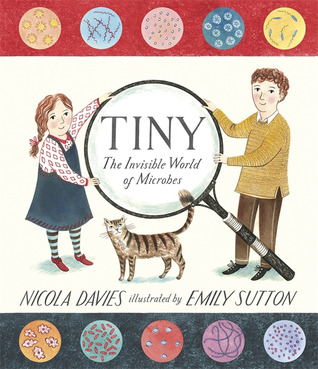

Tiny: the Invisible World of Microbes by Nicola Davies, ill. by Emily Sutton
An introduction to microbes for kids.

This is a scientifically sound intro to protists and bacterias. It is well balanced so kids are warned that some are bad but also reassured that many of them do lots of good too. Very few actual names of microbes are given, they are just introduced in broad terms with a focus on their size, where they live, how fast they can replicate, and what kinds of things they do. The illustrations help kids visualize each of these topics very well.

Social Studies

Killers of the Flower Moon: the Osage Murders and the Birth of the FBI by David Grann
Back in the 1920s, the Osage tribe started becoming very wealthy, thanks to terms that made them the owners of all the stuff that came out from under their territory, including oil. And in the 1920s, there was a whole lot of oil coming out. But as the Osage grew wealthier, they didn't necessarily grow healthier and members of the tribe started dying at an alarming rate, and when two shootings happened, people started to realize that maybe all those deaths weren't so natural after all. But anyone who went in to investigate the murders seemed to end up in an early grave themselves. Local law enforcement wasn't getting any results, and the Osage's cries for justice eventually brought J. Edgar Hoover's new investigators on the scene. This is the story of how horrible injustice and hatred was brought to justice despite a seemingly invincible web of corruption. And then the author relates how many other Osage likely were the victims of greedy people, out for a share of their oil money...any way they could.
Note on content: Violence and murder described.

A hard but really important read. It speaks a lot about how the truth will set people free, and that justice can win the day even where it seems evil is invicible. For many the justice is much too late, but it is important for their descendants to know that their heartache is heard, the lives lost are valued, and to acknowledge that terrible wrong was done. (Click the title to see more of my thoughts.) I like that Grann includes some of his research process in the end of the story to give readers a peek at what happens before the page is written. It also helps the reader better appreciate just how much work and research goes into a book like this, at least one that is done well and incorporates extensive primary resources. It's an important book and put together very well. Highly recommended to anyone interested in history, true crime, or who values justice.


Ten Cents a Pound by Nhung N. Tran-Davies, ill. by Josée Bisaillon
A mother and daughter in the hills of Vietnam talk back and forth about the future. The girl wants to stay near and help her hard-working mother whose body is strained from picking coffee for ten cents a pound. But the loving mother urges her to use that ten cents to go to school and gain a freedom that knowledge can bring to go beyond the village and labor that is all her mother will ever know.

This is so simple but profoundly powerful. How many mothers are there out in the world with just this vision and sacrifice? Many, many thousands. This is an ode to those women who sacrificed and labored long hard years so their children could have a better life. The illustrations are a fitting style for a Southeast Asian setting. A touching and powerful little picture book perfect for cluing kids into the way so many people in the world live, a way to help them understand the privilege and power of going to school, and of course would also make a great Mother's Day read as they ponder all their own mothers have done for them. *

Spanish

2 Fuzzy, 2 Furious (Unbeatable Squirrel Girl novels, #2) by Shannon Hale & Dean Hale
Things have been pretty quiet since the end of Squirrel Girl's last adventure. Crime is at an all time low in Shady Oaks. A huge difference from pre-Squirrel Girl times. In fact, the neighborhood is now safe enough someone is building a mall between Shady Oaks and Listless Pines. Everyone is excited about the new mall. Especially because the mall builders are holding a contest to determine the mall mascot and either Shady Oaks or Listless Pines' secondary schools will get free pizza. Something feels off about the mall to the Tippy-Toe and the squirrels, and also to Ana Sofía. Has anyone else noticed that the mall logo looks an awful lot like the Hydra logo our is she just imagining things? She's a little scared to ask Doreen. She doesn't want to get laughed at. Doreen is also trying to figure out how this friend thing works. Should she talk about the teacher who doesn't seem to like her? Why does middle school life have to be so complicated?

I absolutely LOVE Squirrel Girl's voice and attitude. This book talks about prejudice, hate, and resolving conflicts in a way that is totally entertaining and not preachy but is super solid on the advice. So good. Doreen and Ana Sofía often speak in Spanish or Spanglish and the Spanish isn’t always translated so you get to exercise your language skills while enjoying a fantastic (and frequently funny) superhero story.

Thai

Queen Sirikit: Glory of the Nation
A biography of the Queen Mother of Thailand.

A perfect read right now with her birthday this weekend.


*Books with an asterisk after the review are titles that publishers and Netgalley were kind enough to give me ARCs of in exchange for an honest review.

Thursday, June 7, 2018

Brainstorm 145: Summer reading plans

Forgive the few weeks of no Brainstorm. Our Media Center is getting remodeled this summer (Hooray!) which means I spent the past two weeks busy packing things up (Whew!). Now the books are all packed up and summer break is upon us in just a few hours. I often come up with a summer reading challenge, but my busy schedule didn’t permit that this year. And you know, that’s ok. I think a summer reading goal is best chosen by the individual. Some people need a challenge to push their reading lives. Some people need the summer to just indulge in their favorite genres and all those books they want to read but have been putting off for the books they think they should read. This summer I’m personally letting myself just pick the books I want to read. Want to see some of what’s on my summer reading radar? Feel free to snatch a few ideas from my list for your own, or go make your own list of books you just feel like reading this summer. And if you're one of those people who need a challenge, you can check out my challenge from last year or just search "summer reading challenge," you'll find lots of options.

Brainstorms will be sporadic over summer break but will be back to regular weekly installments in August. Happy summer reading!


Picture Books


Today I’ll Be a Unicorn by Dana Simpson
I love Phoebe and Her Unicorn, and can’t wait to read their first picture book with my unicorn-obsessed little nieces.


Lower Grade Fiction


Journey to Juno (Galaxy Zack, #2) by Ray O’Ryan, ill. by Colin Jack
I’ve been checking out some of the popular lower grade series now that students have turned them in, and I was thrilled with the first Galaxy Zack book. Looking forward to more fun with this intergalactic third culture kid.


Charge of the Lightning Bugs (The Notebook of Doom, #8) by Troy Cummings
These books look way scarier than they really are. I recently picked one up because I was worried about it being too scary for kids, but found the opposite. And I can’t stop reading them! Cummings has created a series of stories about an unlikely trio of friends who help save their town repeatedly from the most imaginative (and un-scary) monsters you’ll ever come across and record their monster observations in a notebook. Lots of problem solving fun with a trio learning about friendship along the way. Kids can feel super tough reading these and parents won’t have to worry about bad dreams at night. (P.S. Adults who enjoy really bad scifi monster movies should love reading these with their kids…or by themselves. The best way I can describe it to adults is that it’s like a kid-friendly version of MST3K in a book.)


Middle Grade Fiction


The Book of Enchantments by Patricia C. Wrede
Wrede is one of my favorite fantasy writers. Her Enchanted Forest Chronicles is my favorite middle grade series of all time, and her young adult fantasy series are also ones I’ve really enjoyed. I’ve been meaning to read this short story collection of hers for forever. It’s about time.


Juvenile Nonfiction


The Girl Who Drew Butterflies: How Maria Merian’s Art Changed Science by Joyce Sidman 
I read another biography of Maria Sibylla Merian earlier this year and she’s a fascinating woman. This bio has been getting rave reviews so I’m eager to check it out.


YA & Adult Fiction


Arabella the Traitor of Mars (The Adventures of Arabella Ashby, #3) by David D. Levine
I have most thoroughly enjoyed adventuring with Arabella in her first and second books. See my reviews of book 1 and book 2 by clicking on their links. The publisher was kind enough to give me an ARC (Advanced Readers Copy) of this book that doesn’t come out till the end of July. I’ve already started it. And I can’t tell you much about it yet, but I will say it hasn’t disappointed. It’s just as good if not better than the first two, and in this one Arabella has to wrestle with whether her allegiance should belong to her passport country or the planet she grew up on. (My full review will be accessible July 17, 2018 via the title link.)


The Gilded Wolves by Roshani Chokshi
I have eagerly devoured every book Chokshi has released of late. Her two young adult fantasy books that blend in Indian mythology are both beautifully written and incorporate some fantastic messages. (See my reviews for The Star-Touched Queen and A Crown of Wishes by clicking on their titles.) Her new middle grade series released under Rick Riordan’s imprint about some girls who are Indian demigods and introduces kids to some of the Mahabharata was just as good. (See my review of Aru Shah and the End of Time by click on its title.) So I’m super excited the publisher gave me an ARC of Chokshi’s next young adult book that promises a thrilling adventure in a reimagined 1889 Paris. Sorry, but it doesn’t come out till January 2019, so you’ll have to wait awhile for this review.


Station Zero (Railhead, #3) by Philip Reeve
If you want to experience some amazing world building, you need to pick up this series. (See my reviews of Railhead and Black Light Express by clicking on their titles.) I can't wait to dive back into the amazing universe that Reeve has created with a several characters caught up in an intergalactic power struggle in a universe transversed by sentient trains and portals…and maybe this book will tell us more about who set up that system.


Nonfiction


Death in the Air: the True Story of a Serial Killer, the Great London Smog, and the Strangling of a City by Kate Winkler Dawson
This part history of an environment disaster and part true crime looks fascinating to me.


Hope in the Dark: Believing God Is Good When Life Is Not by Craig Groeschel
I’ve found Craig Groeschel’s writing refreshing for my spiritual life in the past, so I’m thankful the publisher was kind enough to grant me an ARC of his newest book. I’ve already started it and so far it feels like his most heartfelt book yet. It doesn’t come out till late August, so I can’t say much. But if you ever wrestle with why bad things happen and doubts, keep your eyes open for this book in August.


MI5 and Me: a Coronet among the Spooks by Charlotte Bingham
This sounds like a very unique and interesting memoir by a lady whose father, an MI5 operative, recruited her to work as a secretary in MI5 in the 1950s.


And…who knows what else might jump in my suitcase this summer?


Thursday, May 17, 2018

Brainstorm 144: An Ode to the Super Readers of the Class of 2018

Today is the last day of school for the Class of 2018. Last year I wrote a Brainstorm that was an ode to the super readers of 2017 on their last day. Today I’d like to make it an ongoing tradition. This year’s Seniors were more eclectic in their tastes, so I’ll include one or two books for each super reader. The graduates I’m honoring are the ones that would find time to read despite the grueling schedule and all the culminating projects of Senior year.

The first Seniors I’m honoring are actually a small group of young ladies who would constantly share books with each other. They preferred contemporary Christian fiction, and one girl especially LOVES anything Karen Kingsbury.


The Baxter Family series by Karen Kingsbury
This series, which now is somewhere around 25 books long is grouped into books of 3-4 as it focuses on different members of the Baxter family and their lives.

Target Readers:

  • Contemporary Christian Fiction Fans: The Baxter family is realistically flawed and faces a variety of different challenges over the years. Perfect for readers who like to read about realistic people with realistic problems. 


The Maya Davis series by Erynn Mangum
This three book series follows a normal twenty something young woman who works at a coffee shop and her everyday joys and sorrows as friends start to get engaged and eventually love finds her as well.

Target Readers:

  • Clean Romance Fans/Contemporary Christian Fiction Fans: This series is perfect for readers who like realistic heroines who face mild problems and have a cute love story.


Nothing could convince the next Senior to squeeze in some reading time like a good forensic story or a darkly humorous mystery. Is it any wonder she wants to go into the forensics field herself?


The Devil in the White City by Erik Larson
Larson chronicles the Worlds Fair of 1893 from the moment of conception through till its close and aftermath, the life and crimes of Dr. H.H. Holmes and how Geyer eventually uncovered his evil deeds, and the assassination of the Chicago mayor in October 1893. For much of the book Larson alternates chapters between plans for the fair and the key people involved (foremost Burnham & Olmstead) with all that H.H. Holmes was up to unbeknownst to anyone. Every once in a while a chapter on Prendergrast (assassin of the mayor) would appear.
Note: Click on title for notes on content.

Target Readers:

  • History Lovers/True Crime Fans/Nonfiction Fans: Larson is able to weave history in a way that just leaps off the page. You would think hearing about architect, engineer, and landscape plans for the fair would be dry as dirt, but Larson makes it all quite interesting. Of course, the parts on Holmes are horrifyingly captivating. I found it interesting to connect older parts of Chicago as described in 1893 with present day. In all, a very fascinating read.


The Scandalous Sisterhood of Prickwillow Place by Julie Berry
The seven pupils at St. Etheldreda's School for Young Ladies have quite the conundrum on their hands when both their headmistress and her brother keel over at supper on Sunday night. (You'll forgive them for not being emotionally overwrought about the deaths. Mrs. Plackett and her brother were not exactly known for their kind or generous natures.) Still, all seven young ladies come from home situations which are less than ideal, and when faced with returning to their homes or covering up the mysterious deaths, they opt for the latter. So Mrs. Plackett and her brother get buried in the backyard, the rumor is spread that Mr. Godding had to suddenly leave for India and that Mrs. Plackett is indisposed, and the girls decide to proceed with life as normal as possible and teach each other. Smooth Kitty is in charge of figuring out the financial aspects of their situation, and Pocked Louise is given firm reign of the murder investigation. For murder it was. Louise is able to determine that both adults were killed by cyanide poisoning, and after eliminating each other as suspects, the girls must look out into the community of Ely to figure out who wanted Mrs. Plackett and Mr. Godding out of the way. It will take all of their collected talents to avoid discovery, survive the strawberry social, and solve the murder before someone else joins the headmistress under the cherry tree out back.
Note: Some violence/disturbing scenes.

Target Readers:

  • Victorian Lit Fans/Dark Humor Fans/Mystery Lovers: This one has a decidedly British dark humor flavor, that can be an acquired taste. Somehow, I've got the necessary taste buds....maybe it's my penchant for Victorian lit? Whatever it is, I loved it. The first chapter reminded me quite a bit of Arsenic and Old Lace in a small Victorian English village, and after I found myself thinking that, the very next chapter even had an appearance of elderberry cordial. That made me positive Berry was channeling Kesselring at least a bit. When I went looking, I even found an interview with Horn Book where Berry admits that she was trying to do a comedy in the style of British dark comedies, like Arsenic and Old Lace and The Importance of Being Ernst. The murder mystery was deliciously executed, and overall I found this book satisfying a craving for a Victorian British society with a dose of murder I didn't even realize I needed. I was able to figure out the murderer about halfway through the book, but I could not figure out the motive. And I had no idea who pulled off the less deadly crime that happens (and no, I'm not telling you what it is). It was a good mix of giving readers enough to figure out some of the mystery on their own while still keeping them guessing. If you're worried about the morality of it all, the girls do not get away with it for long at all and there's a good dose of repentance and reform for them at the end. Quite satisfactory. 


The next Senior I’m honoring has the most eclectic reading habits of the bunch, but she especially loves dystopia and thriller.


The Unwind Dystology by Neal Shusterman
(Review for book one, Unwind.) In a future USA that has survived a second Civil War between pro-life and pro-choice armies, the resulting truce included "The Bill of Life" which says that "human life may not be touched from the moment of conception until a child reaches the age of thirteen." But between thirteen and eighteen parents can "unwind" children, that is have them dismantled into parts and live on in others. This book primarily follows three teens who are Unwinds: Connor, the teen’s parents are having him unwound because he's trouble, Risa, the ward of the State who is being unwound because of budget cuts, and Lev, who is being unwound as a tithe. The three cross paths when Connor is trying to escape juvey-cops, causes mayhem on a highway giving Risa a chance to escape her bus to the harvest camp, and Connor uses Lev as a hostage to escape himself and rescue Lev. Then it is a race to stay out of the hands of the juvey-cops and alive until they can get to a relatively safe place, called the Graveyard, and hopefully last there until they reach eighteen. But even the Graveyard has its dangers. (Seriously, throwing hundreds of mostly troubled teens together, what do you expect?) Connor, Risa, and Lev don't set out to make society realize the ethical issues of Unwinding, they're just hoping to survive in one piece. But they might come to realize that survival isn't the highest goal.
Note: Click on title for notes on content.

Target Readers:

  • Dystopia Fans/Ethical Dilemma Ponderers/High-octane Fiction Fans: The pace is fast, you're kept guessing, and Shusterman includes a lot of ethical food for thought but it never feels like he is preachy at all. And the different characters all feel like they have different voices. This was published over a decade ago, but it still feels fresh. It also feels a little eerie since the filler things Shusterman includes between chapters are actual events from the real world, making this seem more realistic than normal for the genre. It isn't always an easy read, but it is a good one to satisfy adrenaline rush needs and might actually give the brain some food for thought about current ethical issues.


The Safest Lies by Megan Miranda
Kelsey Thomas has not exactly had a normal life up till this Junior year of high school. Her mother was abducted as a teenager, disappeared for about a year, and when she reappeared she was 4 months pregnant and had no memory of what happened to her while she was missing. She was a media sensation for several months until she changed her name, built a fortress and disappeared inside with her baby daughter. She has not stepped outside since then. Kelsey has been outside, largely on the urging of her mother's therapist, Jan. But Kelsey only started going to public school a few years ago, and she must follow a rigid set of rules so that her mother feels safe. Also, living with a very anxious woman has also made Kelsey a touch anxious herself. Kelsey's world gets turned literally upside down when a car runs her off a mountain road and she wakes up being rescued by her classmate Ryan from her upside down car dangling over the cliff's edge. The car accident brings Kelsey and her mother into the news and suddenly, it seems the past is repeating itself when Kelsey returns home one evening to find her mother gone. Her mother who has not willingly left the house in 17 years, not even when her daughter had a car accident. Soon, Kelsey finds herself and some friends in very real danger as they hunt for clues as to who has her mother and why.
Note: Click on title for full content notes.

Target Reader:

  • Thriller Fans/Can’t-Put-Down Book Fans/Those Who Want to Better Understand Anxiety & PTSD: I know, this has been in several Brainstorms recently. But this really is one of this Senior's favorite recent reads. She read it and proceeded to recruit about five other readers for it. It is a tricky read in the best possible way for a thriller/mystery. (Things aren't 100% as they seem at first.) But it definitely keeps you sucked into the book. I felt like the portrayal of anxiety helps the reader get a better picture of how people who live with serious anxiety really think. And it also provides a good picture of the challenges for families with a PTSD sufferer. If you like psychological thrillers snatch this one up.


The last super reader of 2018 is one of those guys who grew up through middle school absolutely devouring all the Percy Jackson books, and even through high school would quickly snatch up Riordan’s latest. His love of fantasy also drove him to become an avid Brandon Sanderson fan, and despite the crazy busy Senior schedule, he managed to find time to devour the latest Stormlight Archive book, Oathbringer in one week (no mean feat at over 1000 pages).


The Camp Half-Blood Chronicles by Rick Riordan
Percy Jackson and his fellow demigods have now spread their adventures across three series (well, four if you count cameo appearances in Magnus Chase books). Percy fans have followed him from a 12 year old in book one to now being in college in the Apollo books. Many have grown up right along with this kid who has taught numerous readers more about Greek and Roman mythology than any history teacher could hope to accomplish in one year.

Target Readers:

  • Fantasy Fans/Adventure Fans/Those Who Want to Learn about Greek and Roman Mythology without Studying: Haven’t found anyone who doesn’t like adventuring with Percy Jackson and his fellow demigods as they save the world repeatedly from vengeful gods and goddesses. The series starts off solidly middle grade, but recent books feature more teenagers and one could argue that the latter books are actually young adult fiction. Classification doesn’t seem to make one difference to readers. The teens who grew up with Percy still are eager to read about his latest exploits regardless of where it is shelved, and those just meeting Percy speed through books at light speed.


The Stormlight Archives series by Brandon Sanderson
This is an epic fantasy series currently at 3 books long (promised to be somewhere around 10 books long eventually). It is set in a broken land and follows multiple characters in the midst of a war and land full of mysteries. And…I’m sorry, but summarizing over 3000 pages in three sentences does this absolutely no justice. Suffice it to say, it is epic, epic fantasy.

Target Readers:

  • Epic Fantasy Fans: The truly devoted fantasy fan will love living in Sanderson’s world and then join the masses in for the long, long, LONG wait for the next book. (Sanderson’s averaging about 3 years between books while he writes sequels for about five other series he has going.) But don’t totally despair, readers of this will probably devour all those others too.


Thursday, May 10, 2018

Brainstorm 143: Books & the passage of time

The passage of time is very evident at the end of the school year. Teachers and students start thinking about and evaluating how they’ve changed over the past year. Kids start dreaming about what the next grade up will be like, and it seems like a good time to pull out books that look at the passage of time. These aren’t a whole lot of books out there that cover a broad span of time. Most focus on just a short period during which the action occurs. Occasionally series will span a lifetime or more, but even that is the exception rather than the norm. So as the year wraps up and kids start to ponder the passage of time, or you yourself do, here are some of those rare books that may fit the mood or allow you to extend the conversation.

Picture Books


The Book of Gold by Bob Staake
Isaac Gutenberg wasn't impressed by anything. He wasn't curious. His attitude towards everything was ho-hum. But then one day an old lady tells him about the Book of Gold. A book that looks perfectly ordinary hidden somewhere in the world but when opened turns to solid gold. Isaac starts to tear through books in his search for the Book of Gold. Will he find it, or find something even better?

Target Readers:

  • Book Lovers & Reluctant Readers: This is a touching story about a wise old woman who found a way to get a kid into books, and how he realizes the treasures beyond gold between the covers of the books he opens. 
  • Feel Good Story Fans/Lifespan Story Fans/Changes over Time Fans: This is a heart warming story, as it follows Isaac through time and as an old man he passes on this gift the old woman gave to him. It’s the perfect read for any book lover. Also a good one for those looking for books that explore changes over time - it starts in 1930s New York City and ends in pretty much present day New York City.


Building Our House by Jonathan Bean
Follow a family as they move out of the city to a plot of ground in the country. They have a trailer home hooked up and start working on building their house themselves, from laying the foundation to putting up the walls. The house takes a long time to build, as the seasonal changes help readers understand, but in the end, the family has a grand new house.

Target Readers:

  • Those Building a House/Changes over Time Fans: Those waiting for a home to be built can capitalize on the way this book will help them understand all the things going on that are taking so long. 
  • Family Story Fans: I loved the way this book shows a family working together. 
  • Easter Egg Fans: Observant readers keep an eye out and see if you can find the cat in each scene.


Heron Street by Ann Turner, ill. by Lisa Desimini
A marsh changes over time as settlers come, and the settlement grows into a city. The noises of the land change as time changes.

Target Readers:

  • US History Fans/Changes over Time Fans: This covers a little bit of history. Without identifying them really, it depicts pilgrims, the Revolutionary War in America, and some transportation and architecture changes over time. 
  • Environment Studiers: It also looks at how the animals leave and the marsh grass decreases. Could be used when talking about urbanization and its effects on a place. 
  • Onomatopoeia Fans: The text uses a lot of onomatopoeia to describe things in the story and thus the real focus of the book in the words seems to be the change of the noises in the area over time. 
  • Compare/Contrast Fans: Use this in a compare/contrast activity with The Little House by Burton or The House Held Up by Trees by Koose.


House Held up by Trees by Ted Kooser, ill. by Jon Klassen
There's a house that is supported by trees, and this is the tale of how it got up above the ground in the boughs of trees. At first there were people who lived in the house, but after some years they moved out and no one else moved in. Over time, the seeds that spread grew into trees, the weather wore away at the house, and eventually it was an almost forgotten relic caught up in growing trees.

Target Readers:

  • Changes over Time Fans/Bittersweet Story Fans/Environment Studiers: A somewhat sad story for the house, but an interesting tale of how a forest regrows after being cut down. Could be used in science classes talking about primary and secondary growth or weathering. 
  • Compare/Contrast Fans: As mentioned, you could do a compare/contrast activity when reading this one and The Little House by Burton or Heron Street by Turner.


The Little House by Virginia Lee Burton
The Little House loves watching the days and seasons go by from her spot in the country, but as the years pass the city grows up around her and the Little House is forgotten. That is until one day a great-great-granddaughter of the original owners sees her and moves the house out to the country where once again she is lived in and happy.

Target Readers:

  • Art Fans/Easter Egg Fans: I really like the illustrations in this. Burton weaves in all sorts of details that make this book stand up to several re-readings. I noticed Mike Mulligan's steam shovel on one page, and the various faces the sun makes are quite humorous. 
  • History Studiers/Environment Studiers/Changes over Time Fans/Transportation Book Fans: Classes could use this when talking about the period in US history when industry and technology were growing and urbanization spread; it illustrates that principle very well. Also does a good survey of transportation methods over several decades.
  • Compare/Contrast Fans: As mentioned, use this one with Heron Street by Turner or House Held up By Trees by Hoose for a good compare/contrast activity.


Mama Seeton’s Whistle by Jerry Spinelli, ill. by LeUyen Pham
Every day as the Seeton children grew up, they're mama would call them home to dinner with her simple but effective whistle. It didn't seem to matter where they were in the neighborhood, they could hear it. As the children grow and spread out farther around the world, Mama Seeton misses her children. Papa tells her to go ahead and do like she always used to to see if it would make her feel better. At first it seems it did nothing, but then her four children return from all over the world and Mama Seeton's whistle appears to still work. Eventually her children carry on the whistle with their kids.

Target Readers:

  • Heartwarming Story Fans/Family Story Fans: It is really hard to convey in a summary the emotional power of Spinelli's words and LeUyen Pham's illustrations in this book. It is sweet and lovely, and has wrapped up in it all the love of a close-knit family. Read Spinelli’s note in the back about the inspiration for this story. 
  • Art Fans/Changes over Time Fans: Be sure to read LeUyen Pham's notes in the back on how she had to research this book and plot out the timeline since it covered so many years so she could appropriately have hair styles, clothing, home electronics, etc change correctly. Her researched paid off. The book is very impressive and sweet.


Tree: A Little Story about Big Things by Danny Parker, ill. by Matt Ottley
A little sprout grows into a tree and faces changes.

Target Readers:

  • Literature Analyzers/Changes over Time Fans/Environment Studiers/Tree Lovers: If you want a high school class to practice analyzing literature, this may be a good one to test them with. Because one could debate this story isn't just about a tree. You could argue it is about the storms of life that we all face. It could be the story of how secondary growth happens in ecosystems devastated by natural disasters. It leaves a lot open to interpretation, especially with the things included in the illustrations. And of course, on the surface level, it makes a good story for kids with beautiful illustrations about a tree growing and how its surroundings change over time.


Middle Grade Fiction


Wishtree by Katherine Applegate
Red is an old oak tree. She's been in her spot hundreds of years, and witnessed many things both amazing and heartbreaking. Every year around May for many, many years locals have hung their wishes on her. Wishes both silly and 100% serious. Red can talk, but it is a solemn secret, known only by other trees and animals. But when she thinks her time is drawing short, and a little girl living under her shade, who visits her and the animals who live in her branches nightly, makes a heartbreaking wish Red thinks she can make come true, she breaks her solemn silence.

Target Readers:

  • Voice Appreciators: Applegate has an amazing talent of being able to take on the voice of something not human. She did it in The One and Only Ivan writing from the perspective of a gorilla. And now she's done it again from the perspective of a wise, old tree. It's a splendid piece of writing. 
  • Heartwarming Story Fans/Changes over Time Fans/Community Story Fans/Immigrant Story Fans/Animal Lovers/Deep Theme Fans/Quick Read Fans: This story is touching, about making foreigners feel welcome in their new home. And as Red is threatened with being cut down, given days to prepare, it begs the readers to ponder what they would do in their final days if they knew the end was coming. Would they spend the time pitying themselves, or try to make a difference for others in the time they know they have. That's a topic that doesn't often get covered outside of war stories and is challenging to do in a way that's appropriate and approachable for this age group. But Applegate has done it. So a beautiful story featuring splendid writing, and Charles Santoso's illustrations are stunning complements to the story. Animal lovers will find many of Red’s animal friends delightful too. It's a short read, but a very good one.


Adult Fiction


Where We Belong by Lynn Austin
The book opens in a trek across the desert in 1890 to visit an ancient monastery. As the trek goes on sisters Rebecca and Flora Hawes reflect back on the past 30 years of their unconventional lives, from childhood to middle age, and how God has worked through trips abroad from Chicago to often reveal what He wanted them to do next with their lives. He led Rebecca to study history and languages, and Flora into work with the poor. Flora’s work brings many people into their lives, such as the two young people traveling with them now, Soren and Kate, who are also given moments to reflect on how they got to this point. Through it all, readers are taken on adventures through Europe, North Africa, and the Middle East, as well as shown how two women who want to follow God versus society manage life in late 1800s Chicago.

Target Readers:

  • Sister Story Fans: I loved the way Rebecca and Flora stay strong friends and companions throughout their lives. They are very different, but are great at respecting each others differences and appreciating the ways they’ve been gifted differently. They also work well in balancing each other out and speaking even hard truths to each other. They’re a fantastic sister duo to follow around.
  • Travel Fans/Archeology Fans: I loved all the travel in this and exotic locales, and the way Austin wove in real archeological discoveries. 
  • Christian Fiction Fans/Historical Fiction Fans/Redemptive Story Fans/Changes over Time Fans: Kate and Soren's stories are inspirational in seeing the way the sisters are used to help the poor of the city and change their lives for the better. Overall, I found the entire story moving as Austin highlights how God can use people who are willing to follow Him even down hard roads. It was written with a good pace to keep you turning pages though over 400 pages long, and because you spend over thirty years with the characters you really get to know them well. By the end they feel like old friends. It's also a well-woven tale. Changing perspectives in a story can bring about a train wreck, but Austin worked it so that as the story changes perspectives you've heard one person's observations of events, it goes back to the next narrator's backstory and that way by the end you have a full view of what led to certain events and what's going on in everyone's hearts. Through the passage of the book you get to watch Chicago and America go from pre-Civil War, through the Civil War, through the Great Fire, and right up to the cusp of a new century as Rebecca and Flora grow from girls into middle-aged women. Recommended to anyone who likes historical fiction with some clean romance, fans of Christian fiction, and fans of travel stories. And make sure you read the author's note about the two real sisters who were her inspiration for this story.


Thursday, May 3, 2018

Brainstorm 142: Characters overcoming mental hurdles

Last week I shared books that feature characters who overcome physical challenges. This week we’re looking at characters who have mental hurdles to overcome whether they are emotionally rooted or their brains are just wired differently. So here are some books that can help you better understand the people around you who may have hidden challenges they are heroically overcoming.

Picture Book


After the Fall by Dan Santat
Humpty Dumpty used to sit up on the wall and enjoy watching the birds. But after his fall, he found himself too scared to go up high anywhere again. It isn't until he gets the right motivation that Humpty Dumpty finds the courage to face his fear and trauma.

Target Readers:

  • Readers Who Want to Better Understand Those with PTSD/Readers with PTSD Looking for Characters Like Themselves: Post-traumatic stress disorder is not named in this book, but it does fit Humpty Dumpty’s experience. In just a few sentences and illustrations, Santat manages to convey the full power of how the fall hurt Humpty Dumpty in ways that no one can see from the outside. He shows how it hurts, but that Humpty Dumpty thinks he doesn't have the strength to face his new fears. And then one day, he does find that strength and he finds healing, and it is such a beautiful story. Who expected a Humpty Dumpty story to be moving and an avenue adults can use to help damaged kids work toward recovery? 
  • Nursery Rhyme Fans: Nursery rhyme fans might have always been curious what happened to Humpty Dumpty after his fall. Now they know.
  • Fans of Moving Stories: Santat weaves an inspirational and moving story in this picture book that is a delight to read.
  • Want more PTSD reads?:
    Try the middle grade book The Red Pencil by Andrea Davis Pinkney, ill. by Shane W. Evans or the young adult books Saving Red by Sonya Sones, Rose Under Fire by Elizabeth Wein, or Now Is the Time for Running by Michael Williams. 


Lower Grade Fiction


Anna Liza and the Happy Practice by Eoin Colfer, ill. by Matt Robertson
Anna Liza is the daughter of a psychiatrist. She wants to be a psychiatrist too, so she's started practicing by trying to cheer up people in her mom's waiting room. When she runs into a tough customer she can't get to crack a smile, she decides to dig deeper. She finds out that Edward is sad because his Dad has been sad ever since his Mum left. He says his Dad feels stuck in one spot. Anna Liza decides to try and help them out by getting his dad moving...with roller skates.

Target Readers:

  • Readers Trying to Understand People with Depression: Anna Liza learns through this book that she has a lot to learn about depression. It’s hard to break down such a topic for kids, but Colfer at least opens the door for conversations with this book.
  • Humor Fans/Beginning Readers: This is a fairly quick and easy read aimed at kids who are just ready for chapter books on their own. Anna Liza’s antics result in one wild and crazy adventure for Edward’s dad that lower grade readers should find funny.


The Fish in the Bathtub by Eoin Colfer, ill. by Peter Bailey
Grandpa Feliks is a tough man. He's survived the Germans in WWII. He survived the Russians coming through at the end of WWII and occupying. And he's determined he will make a stand against the Communists too, by having a proper carp for Christmas dinner. Lucja is his 8 year old granddaughter who can't hold still or follow through on a thought ever. But when the carp for Christmas arrives through the black market alive, it goes to stay in the bathtub till Christmas Eve. In that time, though, Lucja develops a friendship with the fish. Even more miraculous, she's sitting still for hours talking to the fish and carrying on coherent conversations with it. Will Grandpa get his Christmas carp dinner or will Mr Fishy get to stay with his new friend?

Target Readers:

  • Readers Wanting to Understand Those with ADHD/Readers with ADHD Looking for Characters Like Themselves: ADHD didn't have a name during this historical period, but Lucja clearly displays all the signs of having it. 
  • Christmas Story Fans/Communist Country Setting Fans/Historical Fiction Fans: This is a Christmas story that's set in Poland during it's years under communist oppression. You get a decent feel for the hardship of Poland without any really harsh details. 
  • Debate Fans: The fish provides a surprising conundrum in the way it helps Lucja. Grandpa's choice is predictable, but Colfer does a good job conveying how hard the choice is for him. Book clubs can have fun debating Grandpa's choice. Would they have made the same choice or did something different?
  • Want more stories with ADHD characters?
    Try the middle grade Joey Pigza series by Jack Gantos or the Percy Jackson books by Rick Riordan.

Middle Grade Fiction


Chester & Gus by Cammie McGovern
Chester is training to be a service dog. He wants nothing more in life than to have an important job and help someone. But he doesn't do well with loud noises and doesn't get matched on the day the other dogs do. A little while later Gus' family takes him in with hopes that Chester will be able to help bring Gus out of his shell. Chester is a very observant dog and learns all about Gus and the ways his autism manifests. He isn't sure how much he'll be able to help Gus, but he's willing to try. However, the teacher in the classroom next door thinks he's only a distraction, his trainer thinks Chester's talents are being waster, and Chester is frustrated with his inability to communicate his observations about Gus to Gus' parents and teacher. Can Chester stay with Gus and find ways to really help him?

Target Readers:

  • Readers Wanting to Better Understand People on the Autism Specturm/Readers with Autism Looking for Characters Like Themselves: I felt like this did a fantastic job of portraying the realities of life for a mostly nonverbal autistic child and his family. And it should be fantastic, the author is the mother of a child like Gus and thus she writes from a place of deep understanding. Chester's perspective helps readers see that despite the lack of verbal communication, such children can understand a lot and have things they love and do well. 
  • Dog Lovers: This is told from the dog's point of view, so dog lovers should eat this up.
  • Want More Autism Reads?
    The autism spectrum is quite broad and each person is different, so I encourage you to read several of these other books featuring characters on the autism spectrum to better understand how it can be different from person to person. Lower grade readers might want to try A Boy Called Bat by Elana K. Arnold. Middle grade readers can check out Rules by Cynthia Lord, The Real Boy by Ann Ursu, Rain Reign by Ann M. Martin, Mockingbird by Kathryn Erskine, or the graphic novel Mighty Jack by Ben Hatke. And young adult readers can try the autobiography The Reason I Jump by Naoki Higashida, translated by K.A. Yoshida and David Mitchell.


Fish in a Tree by Lynda Mullaly Hunt
Ally doesn't mean to get in trouble at school. It isn't her fault the letters won't hold still long enough to read. She has pretty much given up on herself. But a new teacher doesn't see her as a problem who won't finish assignments, Mr. Daniels manages to catch on to Ally's deep, dark secret. She can't read. And all those "pranks" were actually her acts of frustration or genuine tries. With the help of Mr. Daniels and some new friends, Ally starts to think that maybe she isn't dumb and perhaps there is some hope for her.

Target Readers:

  • Readers Wanting to Better Understand People with Dyslexia/Readers with Dyslexia Looking for Characters Like Themselves: When you read this make sure you read the author's note in the back about how this story was inspired by her own experiences in school. She gives a very authentic voice to the struggles of someone with dyslexia, and overall also a voice of hope that things can get better. 
  • Fans of Moving Stories/Contemporary Fiction Fans: This realistic story sees not only Ally get help in her life, but many others. It’s a great feel-good read.
  • Fans of Heartwarming Teacher Stories: Mr. Daniels is a spectacular example of a teacher who is able to meet all the kids where they are and inspire them on to great things. This is one to give your favorite teacher or for wannabe teachers to read for inspiration.
  • Want some more reads about characters with dyslexia or other reading disabilities?
    Try the middle grade book May B. by Caroline Starr Rose or The Wild Book by Margarita Engle. And for lots of true story inspiration check out the biography Creative, Successful, Dyslexic: 23 High Achievers Share Their Stories edited by Margaret Rooke. There are also books out there featuring characters with more general reading disabilities and learning disabilities. Try the middle grade books Close to Famous by Joan Bauer, Waiting for Normal by Leslie Connor, or Save Me a Seat by Sarah Weeks & Gita Varadarajan.


Young Adult & Adult Fiction


The Safest Lies by Megan Miranda
Kelsey Thomas has not exactly had a normal life up till this Junior year of high school. Her mother was abducted as a teenager, disappeared for about a year, and when she reappeared she was 4 months pregnant and had no memory of what happened to her while she was missing. She was a media sensation for several months until she changed her name, built a fortress and disappeared inside with her baby daughter. She has not stepped outside since then. Kelsey has been outside, largely on the urging of her mother's therapist, Jan. But Kelsey only started going to public school a few years ago, and she must follow a rigid set of rules so that her mother feels safe. Also, living with a very anxious woman has also made Kelsey a touch anxious herself. Kelsey's world gets turned literally upside down when a car runs her off a mountain road and she wakes up being rescued by her classmate Ryan from her upside down car dangling over the cliff's edge. The car accident brings Kelsey and her mother into the news and suddenly, it seems the past is repeating itself when Kelsey returns home one evening to find her mother gone. Her mother who has not willingly left the house in 17 years, not even when her daughter had a car accident. Soon, Kelsey finds herself and some friends in very real danger as they hunt for clues as to who has her mother and why.

Target Readers:

  • Readers Who Want to Better Understand Anxiety/Readers with Anxiety Looking for Characters Like Themselves: Kelsey’s growing understanding of her mom really helps readers better understand what it is like to live with anxiety both in yourself and in someone you love. 
  • Suspense Fans: This is one thrilling read from start to finish. It is extremely hard to put down once you start. I’ve handed this to several teens and they’ve brought it back within days saying they read it in one sitting and that their friend so-and-so will be coming to get it because they told them they HAVE to read this. 
  • Want more reads about characters with anxiety?
    Try the picture books I’m Scared by Jennifer L. Holm, ill. by Matthew Holm or Scaredy Squirrel at the Beach by Mélanie Watts. For middle grade readers try A Crooked Kind of Perfect by Linda Urban, Liar & Spy by Rebecca Stead, or the autobiographical graphic novel Real Friends by Shannon Hale, ill. by LeUyen Pham. Also there’s the young adult novel Love, Lies, and the List by Kasie West.


Legion (Legion, #1) by Brandon Sanderson
An interesting short piece by Sanderson. A private investigator with multiple personality disorder is hired to find a device that can take pictures of the past. It has been stolen, and the possible evil uses for the device are too horrible to consider. But the story is more about the main character and his cast of hallucinations and how he uses them to help solve puzzles.

Target Readers:

  • Readers Wanting to Better Understand Multiple Personality Disorder: For some reason mystery seems to be the main genre in which you can find characters with this disorder (usually because it provides a tricky solution to who done it). This private investigator instead uses his disorder to solve crimes. It’s a unique twist and helps readers develop more empathy for such people.
  • Mystery Fans/Readers Looking for a Quick Read: This and its sequel are pretty short mystery reads (under 100 pages). And Sanderson loves to play with your mind so don’t expect an easy solution. If you like to read the book before the TV show comes out, move this one higher on your TBR list. It’s in development for a TV series.