Thursday, August 27, 2015

The Brainstorm Vol 45: Beginning of the year books for K-12

Great books for the beginning of the school year (or any time really).

Picture Book Resources


A Perfectly Messed up Story by Patrick McDonnell
Louie's story is not going as planned. It keeps getting interrupted by a very sloppy and inconsiderate reader. His story is ruined he's sure, because who wants to read a book that's less than perfect?

Activity Tie-ins:
  • Proper Book Care: Whether you teach Kindergarten or Seniors, you probably at some point of the year have to talk to the students about how to take care of their textbooks and other class books. This is the perfect book to make that discussion a little more fun. The "reader" of Louie's story does a HORRIBLE job of taking care of the book. Food gets onto the pages, things get torn and scribbled on (it's the stuff of nightmares for librarians). But the negative example provides the perfect opportunity to talk about how best to care for books so that they last.
  • Perfectionists: I definitely sympathize with Louie's perfectionist sentiments as a perfectionist myself, and I know lots of students are in the same boat. This is a great book to talk about when it is ok to be less than perfect or how to deal with those times when things just aren't meeting your standards. It's a very real stressor for many students, and it's good for them to talk about when to let the perfectionist strive for perfection, when to tell it to take a chill pill, and how we can be our own worst critic. Louie thought his book was a disaster, but ask students if they still enjoyed it.
  • Interactive Books & Setting/Characters: This book adds another dimension to the normal story, in that the reader supposedly enters into the story and the character starts interacting with the reader. If you want to challenge kids to think outside the box while talking about setting or characters, ask them to identify the setting and characters in this book.

Magnolia's teacher told the class to bring in something from nature for show-and-tell, so naturally, Magnolia brought an alligator. At first, the teacher was upset, but Magnolia promised that the alligator would behave and not eat anyone. Well, the alligator doesn't eat anyone, but boy does he find other ways to cause problems which all seem to get Magnolia in trouble! By show-and-tell time, she's oh so ready to be rid of the alligator.

Activity Tie-ins:
  • Class Rules: This is a great way to lighten the mood when talking about class rules or before brainstorming class rules. Magnolia's alligator gets her into all sorts of trouble (and not the kind you'd expect). It's a good opportunity to talk about why we have rules. Also, it's a great time to talk about what is appropriate to bring to school and what should stay at home (or in the swamp). By the end of the story, Magnolia is super sorry she ever brought the alligator to school. 
  • Who's Influencing You?: This story also provides a fantastic opportunity to talk to kids about who they choose to spend time with and how those people influence them. Magnolia's hanging out with the alligator gets her into all sorts of trouble. Obviously, he's not a good influence on her, and she eventually sends him away. Discuss with students some strategies for avoiding bad influences.
  • De-stress Fun Read: There are just those days when everyone's tired and needs a little break. This is a humorous read that can help bring a little joy into a stressful day that needs a bit of fun.
  • Humor in Art: 2/3 of the humor in this book are in the illustrations. Teachers can have students evaluate how Parsley achieved this and how the story changes if you take either the words or the art away.
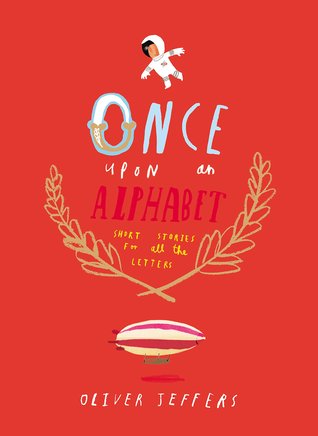
Once upon an Alphabet by Oliver Jeffers
A short story for each letter of the alphabet. Some humorous, some tragic, but all very alphabetical.
This book gets better the farther you get into it as certain characters from previous letters' stories start popping up in later letters. Of course, some stories are fun all on their own too. Overall, a very enjoyable waltz through the alphabet (don't be scared by the 112 pages, they go by fast), with some fantastic vocabulary introduced along the way too.

Activity Tie-ins:
  • Alphabet: Of course, if you have students learning their alphabet, this is a good book to spread out and read a story for each letter that's introduced. You can also have them find every time the letter appears in its story.
  • Observation Skills: As the book goes on characters from previous letter stories start appearing again. Challenge the students to see how many reappearances they can notice.
  • Concise Writing: Jeffers manages to tell stories in about one paragraph for each letter. If you're trying to teach students to write concisely, there are some great examples in this book.
  • Writing Prompt: Emulating Jeffers' book, challenge students to write their own little stories for each letter of the alphabet. This could even be an opener activity for a whole month, prompting students with a different letter each day.
  • Foreign Languages: You can adapt the writing prompt idea for a different alphabet or language. 
  • Fun Short Filler Activity: If you need a book you can pick up and read short snippets of aloud to fill in random minutes of the school day, this is a good one since all the letters are individual stories (though some eventually start to overlap).
  • Vocabulary & Dictionaries & Semantics: Jeffers includes some excellent vocabulary in the stories. And given the short nature of the stories, you can easily take time to demonstrate how to find out what a word means without disrupting the flow of the story much.

Thursday, August 20, 2015

The Brainstorm Vol 44: Books for K-12 classrooms

Here are three books I enjoyed right after school got out for the summer. Two would make great read-alouds, and the third is a novel starring TCKs.

Nonfiction Resource

Unusual Creatures: a mostly accurate account of some of Earth's strangest animals by Michael Hearst, ill. by Arjen Noordeman, Christie Wright, and Jelmer Noordeman
Michael Hearst (with the help of his friendly designers and artist) takes readers on a humorous tour of some of the world's most unusual creatures, from Axolotl to Yeti Crab. The weird and wonderful illustrations will grab younger readers, while older readers will appreciate the humor and interesting facts. Each page includes the Kingdom, Phylum, Class, Order, Genus and Species for the critter, plus normal range, and average size. The pages are just jam packed full of good information. The critters picked span a broad range of types. Most are quite rare, endangered or threatened so Hearst also includes a section in the back for ways readers can help conservation efforts. But the biggest win of the book is that Hearst makes it so entertaining I couldn't help but stop quite regularly to share tidbits with my husband. Spontaneous impulsive sharing is a big sign to me that a book is a winner.

Activity Tie-ins:

  • Nonfiction read-aloud: When I think of a read-aloud, I don't often picture a nonfiction book in my head. But the humor, fascinating facts, and appealing illustrations of this book are sure to suck in even the most die-hard fiction fan. Teachers and parents will also like that because of its structure, you can read as little as two pages at a time in little moments where you need a filler activity.
  • Classification: Just memorizing Kingdom, Phylum, etc can be a little boring. Science teachers going over the classification of living organisms could easily use this book in liven up their classification lessons with some unusual creatures. Each animal has its full classification listed.
  • Environmental care: Several of the animals in this book are endangered because of environmental factors and Hearst provides suggestions of how ordinary people can help the environment, from recycling to other less-frequently mentioned activities. Students can easily pick one way to make sure they are helping rather than hurting the Earth.
  • Fun nonfiction read: If you're trying to help a child find a nonfiction book to read for fun (or even an assignment) this is a great pick. Who says nonfiction has to be boring?
  • Animals: For classes studying animals or looking for ideas for animals to report on, this is a good resource as it introduces many beyond the average bunny and bear. 
  • Nonfiction writing: Hearst accomplishes two important things in his writing: he conveys interesting facts clearly and he makes his readers laugh. You could read just one or two page spreads with students and discuss some of the ways Hearst does these things well before students launch into their own writing.
Fiction Resources

Zorgamazoo by Robert Paul Weston
Morty, a reporter zorgle ends up chosen to go on a quest to find the missing zorgles of Zorgamazoo. Sounds great, right? But Morty feels a bit in over his head. That adventuring stuff is something his Dad did, it’s not really his thing. Katrina Katrell is all for adventure, which is a good thing because she is forced into running away from her guardian when Mrs. Krabone decides Katrina’s imaginative brain must be stopped with some good ol’ brain surgery by the lobotomy doc. Katrina gets away from Mrs. Krabone only to fall into the clutches of an unfriendly street gang. It’s looking quite bad for her until Morty stumbles in and saves the day. It’s only right that Katrina should then help Morty on his quest. So the two of them set off for Zorgamazoo and find plenty of adventures awaiting them.
Oh, and did I mention this entire novel is told in rhyme? Yep, it's 128 pages of rhymed and metered text that creates an adventurous story.

Activity Tie-ins:

  • Read-aloud: This is a book that just begs and screams to be read-aloud. In fact, if you tried to read it quietly you might accidentally find yourself reading it out loud. The story and the format combined will make this a quick, exciting read aloud that will appeal to a diverse audience.
  • Poetry: If you are doing a poetry unit, this is a good pick for those who love the genre to read further. You could also use it for examples of rhyming patterns and meter. Like Dr. Seuss, Mr Weston isn't afraid to make up some words if he can't find one that rhymes. Perhaps these two can inspire some creative new words in young poets.
  • Compare/Contrast: Have students read some of Zorgamazoo and some of a Dr Seuss book and compare/contrast the two authors. OR have students compare/contrast some of Zorgamazoo and some of The Crossover by Alexander. Both are books in verse, but The Crossover uses a whole variety of poetic forms while Zorgamazoo is pretty consistent in poetic form throughout. 


Black Dove, White Raven by Elizabeth Wein
At first Black Dove and White Raven were a pair of women flyers who did stunt flying at air shows. Delia was Black Dove and Rhoda was White Raven. Both were American but had met in France where they also learned to fly and had children with foreign flyer husbands. Delia’s husband was from Ethiopia, and died on duty not long after Delia and Rhoda had gone to America to do air shows together. Rhoda’s husband is Italian, and his duties take him all over the place. So Delia and Rhoda raise their kids, Teo and Emilia together and take them all over on tour. And when Delia dies in an accident, Rhoda takes in Teo as her own. Eventually, Rhoda decides to fulfill Delia’s dream of going to Ethiopia with the kids. She gets a job flying around Dr. Ezra for clinics and takes photographs to sell to magazines. Though Africa is their third continent in their short lives, Teo and Em seem most at home there. They learn the local language from Dr. Ezra’s wife Sinidu, get lessons with another expat family, and help around the village as they can, and in their free time make up stories about their fictional characters, Black Dove and White Raven who have all sorts of adventures. But their idyllic life starts to become threatened by rumblings between the Ethiopians and neighboring colonists, the Italians. Only because of this, Momma starts teaching both teens to fly, a skill they’ve dreamed of since their earliest memories. As war becomes more and more eminent, the family will have to figure out what to do, stuck as they are in a tricky position with ties to both sides.
Note: If you've read some of Wein's other women aviators books, this isn't linked story-wise at all; also it is calmer, less bloody, and has less swearing. (The other books are set in the heat of WWII and are much more intense. I would be ok handing this one to a middle schooler, but I'd only give Code Name Verity and Rose under Fire to high schoolers or older. They are very good, but have more mature content.)

Activity Tie-ins:

  • Book Club Book: There's lots of great discussion points in this book from historical perspective, to racial issues, to the third culture kid experience, to what all is going on in Momma's head. I see too many students get turned off by long books they're forced to read as a class so I wouldn't recommend this for that, but in smaller or less formal settings like free reading discussions or book clubs, this would be good.
  • Third Culture Kids: Give this book to your favorite TCK and allow them to share with you how they identify with Teo and Emilia. Or read it yourself to better understand TCKs. I certainly found many commonalities myself, and I'm technically just an expat, not a TCK. Wein absolutely nails the full joys and trials of being a third culture kid in her depictions of Teo and Emilia. Emilia is Italian/American, born in France, spent her childhood traveling frequently all over the US but never fitting in, and then fully adapts to life in Ethiopia as a teen. She goes around barefoot and can speak the local language so well she could pass for a native if it weren't for her white skin. Teo is Ethiopian/American, born in France, spends his childhood traveling frequently all over the US where he is treated poorly because of his skin color; he loves being invisible in Ethiopia but that only works until he speaks because he can't fully get the language as well as Emilia even though he's the one with Ethiopian blood. Both characters struggle with figuring out where they belong.
  • Debate/Discussion: Teo and Emilia are an interesting and moving example of a pair of kids/teens who culture said shouldn't even be friends let alone family. But despite prejudice and cultural pressures, they love each other like brother and sister. A great class discussion would be to debate who it would have been harder for, Teo or Emilia and why. Or why readers think they didn't succumb to the pressures of society. Was it their own personality, the example of their families, something else, or all of the above? Who is someone your peers may discourage you from being friends with, and how can you apply Teo and Emilia's strategy to your own life?
  • African history: There aren't a whole lot of books for young adults set in 1930s Ethiopia or that explore the conflict between the Ethiopians and Italians at that time as rumblings of WWII roll in. 
  • History through multiple viewpoints: Wein keeps things very balanced as we view the Ethiopian/Italian conflict through the eyes of people who know and love both Ethiopians and Italians. She also explores what it was like for someone with black or white skin to live in America versus Europe versus Africa in the early 1900s. 
  • Multicultural read: Wein does a fantastic job of bringing small town village life in turn of the century Ethiopia to life. It's an interesting peak into a culture not often highlighted in English literature.

Thursday, August 6, 2015

The Brainstorm Vol 43: Books for K-12 classrooms

It's our school's first week back to school, so it is back to posting more regularly on the Brainstorm! Enjoy these books that can be used in multiple subjects and grades.

Picture Book Resources

Pirates vs. Cowboys by Aaron Reynolds, ill. by David Barneda
When the pirates stroll into town and come head-to-head with the local rowdy cowboys, there's an inevitable catastrophe of miscommunication. It looks like the town's about to witness an epic showdown as both sides misunderstand each other and take offense, that is until Pegleg Highnoon -fluent in both cowboy and pirate - sidles in to save the day.

Activity Tie-ins:
  • Cultural Understanding: Our school is international, so like the Pirates and Cowboys, there are inevitable language and cultural differences among the students. This book provides a great opportunity to open up a discussion about how different cultures do things, similarities and differences, etc. and hopefully, develop appreciation and understand so these clashes of cultures can be avoided.
  • Peacemaking: If not for Pegleg Highnoon, this book could have gotten very nasty very quickly. It's a great opening to talk with students about how they can be peacemakers in the school and at home. There are several great organizations out there with further resources on peacemaker training and peer mediation. Our school has done training in the past with resources from Peacemaker Ministries and I've also worked at schools who've used Peer Mediators.
  • Career options: Interpreter is not a career option that often comes up on career days, but it is a growing field. This is a great book to illustrate the need for people whose work is to bridge languages and cultures.
  • Creative Writing: Pitting pirates against cowboys is not something you often see. Have students brainstorm other fun mashups and possible humorous results for short story writing.

Have You Seen My Monster? by Steve Light
A little girl is enjoying the fair while looking for her monster who snuck in before her. As she hunts around the fair (and her monster has a grand ol' time himself) readers will get to learn names to all sorts of shapes found in the fairgrounds attractions.

Activity Tie-ins:
  • Geometry/Shapes for K-12: I've never come across a picture book with such a wide variety of shapes introduced. Of course there's the expected circle, square, and triangle, but there's also every other polygon's name with sides from 3-10 plus petrafoil, rhombus, trapezoid, and trapezium. I remember memorizing a list of shapes for high school geometry class. This book would make learning those shapes a whole lot more fun (and probably more memorable). Not to say littler ones couldn't learn the shapes too. I'd be quite impressed if I ran into a 7 year old who knew what a nonagon and a petrafoil were, and this book could create just such a child.
  • Visual Acuity: For students who need to work on giving their eyes a workout (such as those with lazy eye), the hide and seek aspect of this book is a really good exercise. Not only is the monster hiding on each page of this book, but Steve Light has a tendency to hide things in his pictures without really telling readers. I noticed stars on just about every page of this book though star was one of the few shapes not highlighted. Challenge readers to find all the stars. Or play I-spy with the pages of this book (they are incredibly detailed, almost all in black and white except for splashes of color to highlight the shape for that spread). 
  • Descriptive Writing Exercise: Because each page has a lot going on, this would be a good challenge for writers to describe a page spread in words. 
  • Sequencing Exercise: The girl and her monster meander all over the fair. Have students see if they can put the places of the fair visited in order after reading. (You may want to read once for fun, and then a second time with kids focused on remembering the order.) Sequencing is a good mental workout for everyone, not just kids.

Have You Seen My Dragon? by Steve Light
This was the first Steve Light book I became aware of. In this one, a little boy is looking for his dragon. He starts in his apartment building and works his way all over New York City while his dragon is never too far away. At each stop, only one type of object appears in color and a box on the upper right counts these things from 1-20.

Activity Tie-ins:
  • Counting: Obviously, this is a nice book to work on counting, and it stands out because it goes on beyond the normal stopping point of 10. The way Light illustrated the book in black and white with just splashes of color to highlight the items to be counted on each page makes it easier for young ones to find the items to count.
  • Foreign Languages: If you're practicing numbers in an introductory foreign language class, you could read this book and have students count the items out loud in the foreign language.
  • Point of View & Bending Rules in Art: Light does some very interesting things with point of view in his illustrations. He bends the rules at times to make everything fit. It's a good example of thinking outside the box in art.
  • Visual Acuity: Like in the previous book, the main point is to find the dragon in each spread, but if you hunt around online you can find interviews with Steve Light about other things he's hidden in the pictures of this book. For example, there are mice hidden on every single page. See what other hidden items you can find.
  • New York City Geography: The boy and his dragon manage to make quite a tour of New York City in their escapades. There are maps on the endpapers showing their route all over the city. This is a fun pick to read before you visit New York, or if you're studying the city and want to highlight some of the different areas.
  • Geography & Community Study: Students could make a map of their own city. Pick places where a dragon (or another visitor) may want to explore, and then develop a route and maybe even transportation that could be used to get from place to place.
  • Sequencing Exercise: Like in Have You Seen My Monster? you can test how well readers are paying attention by asking them put places visited in order of when they appear in the book.
  • Compare/Contrast: Read both of Steve Light's Have You Seen... books and have students compare/contrast them.
Chapter Book Resource


Echo by Pam Muñoz Ryan
If you asked me to pick next year's Newbery winner right now, this is the book I'd give that special shiny sticker to. It's a fantastic example of beautiful writing and incredible story weaving. One could argue that it really isn't one book, but four woven into one big, moving story. That said, it's a little hard to summarize, but here goes:

Once upon a time, a little boy in Germany becomes lost in the forest where he meets three strange young women and finds a book that tells an odd tale about them, a witch, and a harmonica that must save a life for the women to be freed. 

Friedrich is a boy in 1930s Germany. Life isn’t easy for him due to a birthmark on his face, making him easy prey for bullies and teasing. It’s for this reason he works as an apprentice at the harmonica factory during the morning and spends the afternoon in private tutoring with various men of the factory. During hard times Friedrich finds solace in music, playing the cello or a special harmonica he finds in the factory. Things start looking worse and worse for Friedrich as Hitler’s policies begin to spread and all those who have differences, including birth marks, fall into ill-favor. And those who don’t agree with Hitler’s policies could be in just as much danger, like his Papa.

Mike is an orphan in 1930s Pennsylvania. When Granny was getting to ill to care for him and his little brother Frankie, Gran found them a boys’ home with a piano and left them with the stipulation that they should be kept together. But Ms Pennyweather seems more concerned with what kind of money she can get out of the boys in the home than honoring last requests of relatives. She begins threatening to send the boys separate ways. Mike’s one solace is in music. One day a man comes and asks to hear the piano played. He is enthralled with Mike and Frankie’s music, and takes them to live with a Mrs Sturbridge. But though the house is beautiful and they get new clothes, great food, and even things like harmonicas, the new place feels too good to be true, and it seems that Mrs Sturbridge doesn’t want them.

Ivy is perfectly happy with her life in 1942 in Fresno, but the new year promises to bring changes. Her father gets an offer to go work at an orange grove in Orange County with a chance at a permanent house and land if the job goes well. Ivy is crushed that they have to move right then. Her class was going to be on the radio and she had a harmonica solo. The move has some happy surprises, like her own bedroom and a nice girl her age who lives next door. But to her shock, because of her heritage, Ivy has to go to Lincoln Annex school instead of the main school. It seems grossly unfair. Injustice seems to run rampant in the area. The land her father is working belongs to Mr. Yamamoto, who, along with his wife and two daughters, has been put into an internment camp because of his heritage. His son, Kenneth, alone escaped the camp, only because he had already enlisted with the Marines. Other neighbors want the Yamamotos to sell the land and be gone for good, but if that happens, the job for Ivy’s father disappears. Still, there are bright spots in Ivy’s life here. She has her new friend Susan, and she gets to start learning the flute, which greatly excites Ivy because she loves music.

One thing unites all of the stories, a single harmonica that moves from one person to the next and brings hope, and eventually to one owner, a saved life.

Activity Tie-ins:
  • Actually, don't mess this one up by tying it to other assignments. Just read it. Read it yourself and then rave about it to your students. Then hopefully, they'll do the same and the book will just find it's way into numerous hearts. If you need further selling points here:
    • It blends fantasy & historical fiction. I have trouble getting historical fiction off the shelves, but fantasy won't stay on. It's a good way to sneak in some history to fantasy lovers.
    • It has several cultures tied together: German, Hispanic American, midwestern American, and Asian American.
    • It addresses prejudices and those who overcome difficult circumstances in every story.
    • Music and its power to help heal and build bridges is celebrated.
    • It's a really, really, really good read. Just go pick up a copy for yourself.

Thursday, June 4, 2015

The Brainstorm Vol 42: Books to keep kids busy this summer

I've been remiss in posting recently thanks to the mad-dash-to-the-finish that is the last couple weeks of school. Now that it is THE last day of school, the students have gone home, and teachers are starting to retreat for well-earned vacation time, I have some time to do a summer post.

Instead of books to use in the classroom, this time I'll highlight great books that will keep kids engaged for hours this summer. Yes, the elementary librarian and I came up with some lists of fun books to read this summer for various age groups (see links at the bottom of this post). And I completely and fully hope kids spend hours and hours reading this summer. But these are more books that will keep kids engaged above and beyond just the reading time.


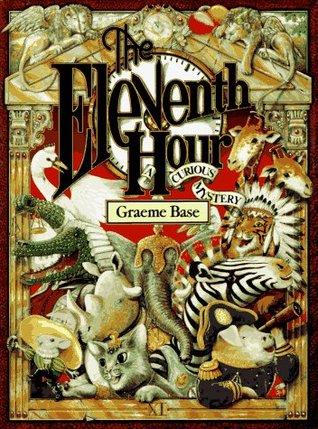
The Eleventh Hour by Graeme Base
At Horace the elephant's birthday party, all the guests are having a grand time until it comes time to eat the gorgeous birthday feast they glimpsed at the start of the day and it is gone. Which guest ate all of the food? That's the mystery readers are challenged to solve, and there are multiple clues in all sorts of forms on every page. The solution is hidden in a special envelope in the back of the book.

You really can't go wrong with a Graeme Base book for hours of entertainment. Even toddlers can adore his gorgeous, brightly colored illustrations and catchy rhyming texts. Older children will love how he always has things hidden in his illustrations for observant readers to find. But this one probably will devour the most time because of the dozens and dozens of various codes and hidden things. I remember spending hours with my siblings pouring over this book one summer as we tried to be the first to solve the crime (Mom hid the answer page from us till she thought we were ready). If you're looking for one book to captivate an elementary-aged kid for the entire summer, this is a solid pick.


Escape from Mr. Lemoncello's Library by Chris Grabenstein
Alexandriaville, OH is getting a new public library, thanks to the generous funding of hometown game designing legend, Luigi Lemoncello. Twelve twelve year olds who win an essay contest will be the luck people to get to enter the new library first, and they don't just get to visit, they get to spend the night. Kyle Keeley is a huge fan of Mr. Lemoncello's games, both board games and video games. They're wild, crazy, and always fun so he's ecstatic to be a winner. He's joined by eleven other students from his class including his best friend Akimi, library aides Miguel and Andrew, town snob Charles, bookworm Sierra, and desperate for fame and/or fortune Haley. The evening proves to be everything the children could have hoped for with fun games galore, but in the morning when they go to leave they find the library's front door locked. It turns out, Mr. Lemoncello has one more, rather elaborate game in store for the children who are game, with a grand prize of lots of money and becoming the future star in Mr. Lemoncello's commercials. Some of the children are in it for the fun of Mr. Lemoncello's games, some are in it as a matter of pride, and some are just plain desperate for the fame and fortune. The game is to figure out how to get out of the library without using the front door and without setting off any alarms. There are clues all over the place for the observant to find, but figuring the way out will be tricky. Kyle and Akimi quickly realize they'd do better as a team, and eventually pick up some other teammates along the way. Charles wants the prize for himself, but he isn't opposed to using others to get there. It's a wild and crazy, mind-stretching ride to the finish to see who will figure things out first.

This has been one of my go-to recommendations for just about any reader this year, and every single one has come back asking if I have any other books like it. The adventure itself is fun, but what sucked me and other readers completely into it's thrall are all the puzzles. Because clever readers can solve the puzzles right along with the kids in the library (and even cleverer readers may solve them before the characters). And there are extra puzzles to solve at the end for those who so choose. It's a code breaker, puzzle solver's enchanted playground of fun. Those who are ready for more advanced code breaking should give the next book a shot.


The Code Book by Simon Singh
Upper middle grade or high school (or adult) readers craving more codes and puzzles should check out this book. Simon Singh presents the history of codes, ciphers and code breaking and the influence of history, linguistics, math, and science (and vice versa). He does this in a highly readable way that flows well. But what puzzle enthusiasts will love most about this book are all the codes that Singh gives readers to crack. Some are really super hard and could potentially take all summer break to crack.


Half a Chance by Cynthia Lord
Lucy's family has just moved, again. She really isn't looking forward to making new friends again or trying to find her place, so she finds it a pleasant surprise when the next door neighbors seem to adopt her into their little group immediately. Of course, they are only there for the summer. In fact, most of the town is only at the lake for the summer, but Lucy will take the friendship while she can get it. She knows there are different kinds of friends, and she keeps waiting for Nate to be one of those interested-only-till-your-not-new-anymore friends, but he keeps inviting her to help on the loon watch and helps her with the photography contest she's secretly decided to enter. It has to be a secret because her dad is the judge, and though there are no rules about family members entering the contest, she knows he'd discount her entry right away if he knew it was her. But she really wants to know what her dad thinks of her pictures. Are they good enough to earn his attention? Can she find the right subjects in this little lake town to give the photos a certain something? And then, Lucy starts to realize that this may be the last time Nate's family comes to the lake at all, and she could lose the only friends she has in her new spot. Through the fates of the local loons, a photography contest, and the things going on with her next door neighbor Nate's Grandma Leilah, Lucy learns a lot about treasuring the moments and dealing with changes.

On page 23 of the book, the photo scavenger hunt is outlined for the characters. Readers looking for a fun photographic challenge for the summer could see what photos they could come up with to fulfill the scavenger hunt themselves. Thanks to digital photography, this would be a cheap activity for kids parents trust with a camera or phone with a camera, but it will also challenge them to think creatively (like the characters in the story) as the words for each photograph are vague and open to lots of interpretation. What to them is a photograph that says "Sticky" or "Secret" or "Out of place" or "Hope?" Those who like competition could challenge friends or relatives to do the same photo scavenger hunt and then compare photos at the end of the summer.

Ms Sarah's Fun Books for K-2nd to Read This Summer
Ms Sarah's Fun Books for 1st-3rd to Read This Summer
Mrs Becky's Fun Books for Middle Grades to Read This Summer
Mrs Becky's Fun Books for Young Adults to Read This Summer

Thursday, May 7, 2015

The Brainstorm Vol 41: Books for K-12 classrooms


Picture Book Resources


Waiting Is NOT Easy by Mo Willems
Piggie has a surprise for Gerald, BUT Gerald has to wait for it. And wait. And wait. And waiting is SO not easy. Gerald just about gives up, but curiosity gets the best of him. Finally the surprise arrives, and it is turns out well worth the wait. Gerald totally captures the essence of everything that is painful about secrets and waiting, but Willems manages to make it humorous. The surprise is something in nature, highlighting the beauty of the simple things around us we take for granted (if you really want to know what it is, click on the title and peek at the spoiler).

Activity Tie-ins:

  • Patience: I know, patience is often a seemingly dirty word. It's so hard. But it is an inevitability. This book provides a great chance to talk to students about the benefits of waiting patiently versus getting something immediately. Have them think of something they had to wait for and something they got quickly, which do they value more?
  • Waiting Activities: This is a great segue into planning how to use time while waiting. Have students brainstorm a list of things they can do to fill those painful hours of waiting, like reading this book or other good books.
  • Appreciating Nature: The surprise is 100% natural, but often overlooked or taken for granted. Have students come up with other options for natural surprises Piggie could show Gerald. Maybe they can even make their own book with their own characters sharing the beauty of creation with each other.
  • Drama/Speech Exercises: Elephant and Piggie are very emotive characters. This book and all of their books are great for having students practice reading expressively. Drama teachers could easily use the books for students to practice various emotions and expressiveness in by acting out the books in class with a partner.

Pirate, Viking & Scientist by Jared Chapman

Pirate and Scientist are friends. Scientist and Viking are friends. But Pirate and Viking are decidedly NOT friends. Scientist wants both his friends to have fun at his birthday party so he comes up with several different hypothesis for how to get the two enemies to be friendly. He tests each one out at his birthday party, but nothing seems to be working. The results are clear, none of Scientist’s hypotheses have been correct so far. So he decides to try one last thing, he asks the two about their favorite activities...and wonder of wonders, the former enemies are brought together by a common interest.

Activity Tie-ins:

  • Scientific Method: If you're looking for a fun way to introduce the scientific method, this is THE book. It's fun and funny, but also scientifically sound. Scientist drafts his hypotheses, runs the experiments, and then goes back to the drawing board each they fail.
  • Friendships: Making friends with people is not always easy. Read this book and talk with students about how finding common ground can help build friendships.
  • Peacemaking: I love that Scientist didn't just choose one of his friends to come to his party, he decided to be a peacemaker between his two friends. A great book to use when talking about resolving conflicts, helping friends work out differences, and being a peer peacemaker.
  • Fun read aloud: Sometimes, we just need to blow off steam with a rollicking good book, and so do kids. As the end of the year craziness starts to set in and tempers start to run short, this may be just the book break you and your class need.
Chapter Book Resource

The Honest Truth by Dan Gemeinhart
Mark is tired of his life being controlled by illness. He's tired of putting on a brave face. He's tired of hiding tears. He's tired of making his parents cry. And so when the latest news comes from the doctor that the cancer is back again Mark grabs his dog and decides to go climb Mt. Rainier. He's thought this through enough that he leads a false trail for the police and his parents so he can actually make it there. The way to the mountain is rough, especially for someone as sick as Mark, but he's determined to die on his own terms. He did leave a note for his best friend Jessie, giving her a clue as to where he's gone. But he trusts her to keep his secret, just as he's trusted her to let him be real when no one else would. Jessie is tormented by this burden Mark has left on her shoulders. Is it best to let him have his desire, or should she tell his worried parents where he is? As Mark sets out to conquer the mountain, he finds unexpected things the trip brings up that he must confront to get at the honest truth.
To be honest, I picked this up expecting the usual cancer book. The type that scars you enough you have to tell someone about it, but really isn't that spectacular writing-wise. This is not the usual cancer book. Gemeinhart's writing has depth in symbolism and lyrical flow (especially when it's Jessie's voice). From the haikus throughout the book that better express things than any paragraph could to the way the mountain symbolizes cancer in a way anyone with cancer (or anyone who has watched someone going through cancer) can relate to. It's not as gut wrenching as A Monster Calls and not as cheesy or cliché as The Fault in Our Stars (and certainly doesn't have the mature content of that book). This is a perfectly even-keeled look at what a person going through cancer experiences, but it is done in an exceedingly artful way.

Activity Tie-ins:

  • Build empathy: If your class has someone going through something like Mark or has a family member going through such an ordeal, this book could help students better understand their struggles. 
  • Symbolism: If you're looking for a book for students to read so that you can talk with them about symbolism, this is a good one. There are several things in the story that can be picked apart and analyzed for greater depth.
  • Debate/Persuasive Paper: Mark puts Jessie in a very tricky position of knowing where Mark is but not knowing whether she should tell his parents or not. This would generate great grounding for a class debate or a short persuasive paper. Did Jessie do the right thing or not? What should she have done differently? What would you have done in her place?
  • Haiku: Haiku poems are found throughout the story and Gemeinhart uses them very well. You can discuss with students why you think the author chose to include these, why they make the writing better, etc. You can also challenge students to write their own haikus in short stories.
  • Voice: The story is told both by Mark and Jessie. Each has a distinct voice even though they were written by the same person. Have students try to analyze what Gemeinhart did to make their voices distinct. Then have them try and write a story that includes two different characters' perspectives and apply what they learned. 
  • Map skills: Readers can practice their map skills by tracing Mark's path. This may also help them better understand the pacing and setting of the story.
  • Writing: Many readers are not going to be 100% satisfied with the end of the story. Ask them to write what happens to Mark and Jessie in the following year.